




What's Happening?
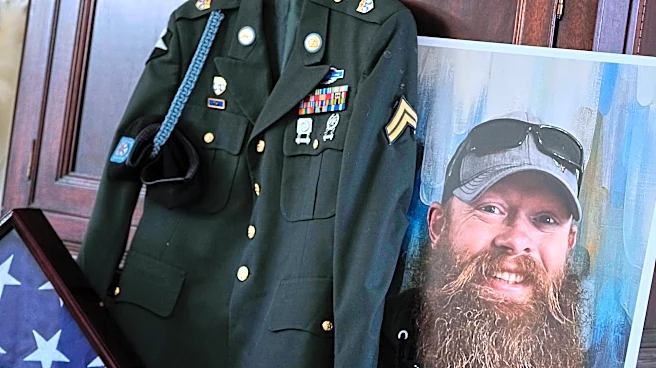
The Arizona Court of Appeals has overturned the manslaughter sentence of Gabriel Horcasitas, who was convicted in the 2021 road rage shooting death of Chris Pelkey in Chandler. The appellate court ruled that an AI-generated video of the deceased victim,
played during the sentencing, was prejudicial and rendered the sentencing procedure fundamentally unfair. The video, created by Pelkey's sister, used AI to recreate his image and voice, delivering a message of forgiveness to Horcasitas. This marked the first instance in Arizona judicial history, and potentially nationwide, where AI was used to create a deceased victim's impact statement. The original sentencing judge, Todd Lang, reportedly referred to the video in his closing statements and was moved by it, leading to a 10.5-year sentence for Horcasitas, exceeding the state's request of 9.5 years. The appellate court stated that the AI video was not reliable and did not reflect actual events, but rather presented a depiction of the victim's thoughts created from the imaginings of his sister.
Why It's Important?
This ruling sets a significant precedent regarding the admissibility and ethical implications of AI-generated content in U.S. legal proceedings. The court's decision highlights concerns about the reliability and potential for prejudice when using AI to simulate a deceased person's testimony or statements. It underscores the challenge of balancing the emotional impact desired by victims' families with the need for fair and unbiased judicial processes. The case brings to the forefront the evolving intersection of technology and the justice system, prompting questions about how courts will define and regulate the use of advanced AI tools. This could lead to new guidelines or legislation concerning AI in courtrooms, impacting future cases where families might consider using similar technology to convey a victim's perspective. The decision also emphasizes the judiciary's responsibility to ensure that evidence presented is authentic and not subject to manipulation or subjective interpretation, especially when it comes from a source that cannot be cross-examined.
What's Next?
Gabriel Horcasitas will be resentenced, as the Arizona Court of Appeals has remanded the case for further proceedings. The resentencing date has not yet been decided. This case is likely to prompt broader discussions within the U.S. legal community about the appropriate use of artificial intelligence in courtrooms. The Arizona court has already formed an AI committee to examine AI use and make recommendations for its best application, acknowledging both its potential for efficiency and its capacity to hinder justice if used inappropriately. Other states and legal jurisdictions may follow suit, developing their own guidelines or policies to address the emerging challenges posed by AI in legal contexts. This ruling could also influence how victim impact statements are prepared and presented in the future, potentially leading to stricter rules regarding the authenticity and source of such statements, particularly when technology is involved. The legal community will be closely watching the resentencing and any subsequent developments to understand the long-term implications of this landmark decision.
Beyond the Headlines
The use of AI to create a 'deepfake' victim impact statement raises profound ethical and philosophical questions about representation, authenticity, and the nature of truth in legal settings. While the family's intention was to 'bring back to life' Chris Pelkey and convey his spirit, the court's rejection of the AI video underscores the legal system's reliance on verifiable facts and direct testimony. This case highlights the tension between emotional closure for victims' families and the objective standards of justice. It also opens a Pandora's Box regarding the potential for AI to be used to manipulate perceptions or create narratives that, while emotionally compelling, may not accurately reflect the deceased's actual thoughts or feelings. The ruling serves as a critical reminder that as AI technology advances, legal frameworks must evolve to address its implications, particularly in sensitive areas like criminal justice where the stakes are incredibly high. The case could spark a broader societal debate on the boundaries of AI in representing human experience, especially after death, and the ethical responsibilities of those who deploy such technology.