

What's Happening?
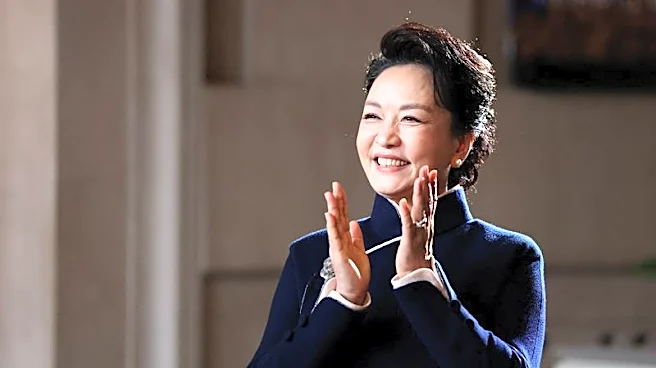
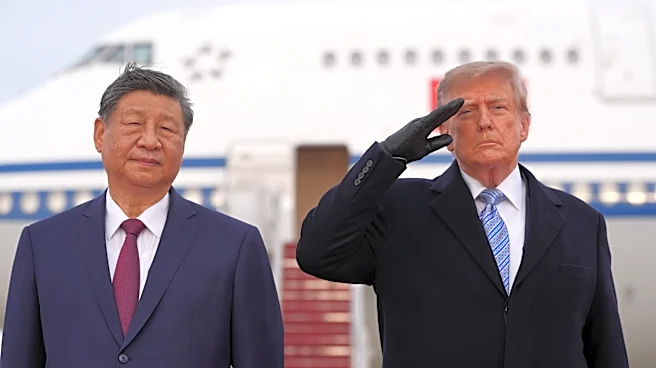
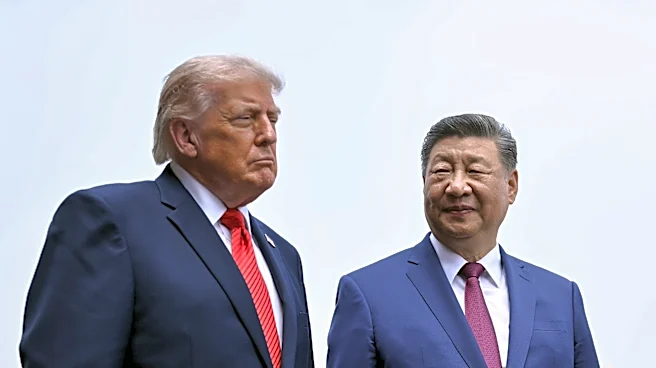
Melania Trump, the U.S. First Lady, and Peng Liyuan, China's First Lady, visited the Smithsonian's National Museum of Asian Art in Washington D.C. This outing, which occurred while President Trump and Chinese President Xi Jinping held private talks, marked
their first public meeting in nearly a decade. The first ladies toured the Peacock Room, an ornate dining room, and observed a stone disk from ancient China, along with an oil painting by James McNeill Whistler. Children from the Hope Chinese School performed traditional Chinese folk songs for them. The event was seen as a display of 'soft power,' uniting two prominent figures known for their blend of style and diplomacy. Their interactions and fashion choices were closely scrutinized for insights into the relationship between the two nations. Peng Liyuan also expressed appreciation for the recent return of Chinese cultural relics from the U.S.
Why It's Important?
This high-profile cultural exchange between the U.S. and Chinese First Ladies carries significant diplomatic weight, particularly given the broader context of U.S.-China relations. Such 'soft power' initiatives can help foster goodwill and cultural understanding, potentially easing tensions or opening avenues for dialogue beyond formal political negotiations. The scrutiny of their interactions and attire highlights the symbolic importance placed on these figures in international diplomacy. For the U.S., hosting China's First Lady at a prominent cultural institution like the Smithsonian underscores a commitment to cultural exchange, even amidst complex geopolitical dynamics. The discussion around the return of Chinese cultural relics also touches upon broader issues of cultural heritage and international cooperation in preserving and repatriating artifacts, which can have implications for museum policies and international agreements.
What's Next?
The immediate next steps involved a lavish state dinner following the museum visit, where the diplomatic engagements continued. Future interactions between the first ladies, though not explicitly scheduled, could build upon this renewed connection, potentially leading to further cultural exchanges or collaborations on shared interests, such as public welfare initiatives, given Peng Liyuan's role as a goodwill ambassador. The ongoing review of Smithsonian museums, ordered by the White House to ensure exhibits 'celebrate American exceptionalism' and 'remove divisive or partisan narratives,' suggests that cultural institutions may continue to be a focal point for discussions about national identity and international representation. The return of cultural relics could also set a precedent for future repatriations, influencing policies regarding historical artifacts.
Beyond the Headlines
Beyond the immediate diplomatic optics, this event subtly highlights the evolving roles of first ladies in international relations. Both Melania Trump and Peng Liyuan, each with distinct public profiles—one a former fashion model, the other a famed soprano and public welfare advocate—leverage their positions to engage in cultural diplomacy. This engagement can humanize international relations, offering a softer, more accessible face to complex state-to-state interactions. The focus on their style choices also underscores the intersection of fashion, culture, and diplomacy, where attire can convey messages and influence perceptions. Furthermore, the visit to the Smithsonian, an institution that has faced scrutiny regarding its exhibits, brings to light the ongoing debate about how cultural institutions balance national narratives with international collaboration and the ethical considerations surrounding cultural heritage.