





What's Happening?
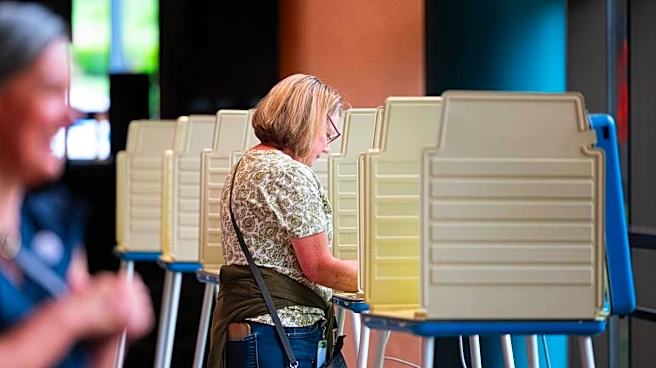
The Department of Justice (DOJ) under the Trump administration has released a legal opinion justifying its nationwide voter data collection efforts. The memo argues that federal oversight in vetting voter eligibility is lawful, despite multiple court
rejections. The DOJ cites the 1960 Civil Rights Act and other federal election laws to support its position, claiming these statutes require states to maintain accurate voter rolls. However, federal courts have dismissed several lawsuits from the DOJ and the Department of Homeland Security, which sought to compel states to comply with these data collection efforts. Critics argue that the administration's actions lack legal basis and infringe on state rights.
Why It's Important?
This development is significant as it highlights the ongoing tension between federal and state authorities over election administration. The DOJ's efforts to collect voter data have faced strong resistance from states, which argue that the federal government lacks the authority to intervene in state-managed election processes. The legal opinion released by the DOJ could have implications for future federal-state relations and the balance of power in election oversight. The controversy also raises concerns about voter privacy and the potential misuse of collected data. The administration's actions could impact public trust in the electoral process and influence future election-related policies.
What's Next?
The DOJ's legal rationale is likely to face further legal challenges as states continue to resist federal demands for voter data. The administration's efforts to enforce compliance may lead to additional lawsuits and court rulings. The outcome of these legal battles could shape the future of federal involvement in state election processes. Additionally, the administration's push for voter data collection may prompt legislative action to clarify the roles and responsibilities of federal and state authorities in election oversight. As the situation evolves, it will be closely monitored by election officials, legal experts, and civil rights organizations.