





What's Happening?
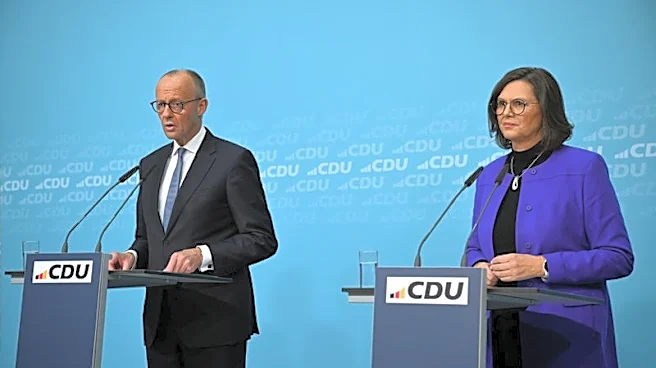
Federal Chancellor Friedrich Merz has called for the protection of freedom and democracy in Germany and Europe on the 37th anniversary of the fall of the Berlin Wall. In a post on X, Merz highlighted the historical significance of November 9th, noting
its association with three pivotal events: Kristallnacht in 1938, the proclamation of the republic in 1918, and the fall of the Berlin Wall in 1989. He stated that November 9th represents both the darkest and happiest moments in German history, encompassing antisemitism, persecution, the dawn of democracy, and the reunification marked by the fall of the Wall. Merz underscored that freedom and democracy should never be taken for granted and urged their protection across Germany and Europe. Later in the day, the Chancellor is scheduled to attend a ceremony commemorating the 20th anniversary of Munich’s main synagogue, Ohel Jakob, alongside Bavarian state premier Markus Söder and State Parliament President Ilse Aigner. Numerous other commemorative events and discussions are planned throughout Germany to mark this significant date.
Why It's Important?
Chancellor Merz's statement on the anniversary of the Berlin Wall's fall carries significant weight, particularly in the current geopolitical climate. His emphasis on protecting freedom and democracy resonates beyond Germany's borders, serving as a reminder of the fragility of democratic institutions in Europe and globally. The historical context he invoked, linking the fall of the Berlin Wall with the dark period of Kristallnacht and the birth of the republic, highlights the continuous struggle for democratic values against extremism and intolerance. This message is crucial for reinforcing European unity and democratic principles, especially as various nations face challenges from populist movements and external threats. The call to safeguard these values is a direct appeal to citizens and leaders to remain vigilant and actively participate in upholding the foundational tenets of their societies. The commemoration also serves as an educational moment, ensuring that historical lessons about division, persecution, and the fight for freedom are not forgotten.
What's Next?
Following Chancellor Merz's remarks, Germany will continue with various commemorative events and discussions throughout the day to mark November 9th. These events are expected to foster public discourse on the importance of democratic values and historical remembrance. The Chancellor's participation in the synagogue anniversary ceremony further underscores the commitment to combating antisemitism and promoting interfaith understanding, which is a continuous effort in Germany. In the broader European context, Merz's call for protecting freedom and democracy may influence ongoing policy discussions within the European Union regarding democratic resilience and responses to rising extremism. The emphasis on these values is likely to be reiterated in future political speeches and policy initiatives, reinforcing Germany's role as a proponent of democratic stability in Europe. The ongoing public engagement with these historical events aims to strengthen civic awareness and commitment to democratic principles.
Beyond the Headlines
The commemoration of November 9th, as highlighted by Chancellor Merz, delves into the complex duality of German history, a day marked by both profound tragedy and immense triumph. This duality—from the horrors of Kristallnacht to the joy of the Berlin Wall's fall—serves as a powerful reminder of humanity's capacity for both destruction and liberation. Beyond the immediate political implications, Merz's message touches upon the ethical imperative of historical memory and the continuous responsibility to learn from the past. It underscores that democracy is not a static achievement but a dynamic process requiring constant vigilance and active participation. The ongoing discussions and events surrounding this date contribute to a national narrative that acknowledges past wrongs while celebrating progress, fostering a collective identity rooted in democratic values. This historical reflection is vital for shaping future generations' understanding of their civic duties and the importance of safeguarding fundamental freedoms against any resurgence of authoritarianism or intolerance.