






What's Happening?
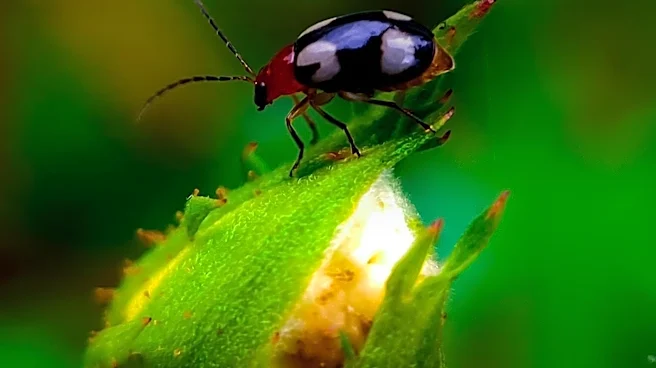
Los Angeles is experiencing a significant increase in the population of figeater beetles, also known as green fruit beetles or Cotinis mutabilis. These large, metallic-green insects, about an inch long, are frequently seen flying clumsily and often colliding
with people. Megan Barkdull, assistant curator of entomology at the Natural History Museum of Los Angeles County, attributes their awkward flight to their size and relatively small wings, making it difficult for them to control their trajectory. August marks the peak season for these beetles in Los Angeles, with sightings beginning in June and gradually decreasing through the fall, according to data from iNaturalist. While often mistaken for Japanese beetles, which are considered pests, figeater beetles are generally not harmful to humans or healthy plants. They primarily feed on decaying soft-skinned fruits like figs and grapes, and their larvae, known as grubs, consume organic matter in compost.
Why It's Important?
The surge in figeater beetle populations in Los Angeles is important as it highlights the ecological impact of human activities and environmental changes. Barkdull suggests that human-driven factors contribute to their thriving numbers, including the creation of compost piles, irrigation of lawns and greenery, and the planting of fruit trees, all of which provide ideal conditions and food sources for the beetles. Climate change is also believed to be expanding their habitable range, as evidenced by their recent appearance in Utah and Colorado. While these beetles are not considered agricultural pests because they prefer decaying fruit, their increased presence can be a nuisance to residents. Their role in the ecosystem as decomposers, breaking down decaying matter, is beneficial, yet their clumsy flight and frequent encounters with people are drawing public attention and sometimes concern. Understanding these population dynamics is crucial for urban ecology and pest management strategies.
What's Next?
As August is the peak season, the figeater beetle population is expected to gradually taper down through the fall. Public awareness campaigns or educational efforts might be considered to inform residents about the beetles' harmless nature and their ecological role, distinguishing them from more destructive pests like Japanese beetles. Karey Windbiel-Rojas, an associate director with the University of California’s statewide integrated pest management program, advises against using pesticides for figeater beetles and recommends gently relocating them if they enter homes. Continued monitoring of their population trends and geographical spread will be important, especially in the context of ongoing climate change and urban development. Researchers may further investigate the specific environmental factors contributing to their population boom to better understand and manage their presence in urban ecosystems.
Beyond the Headlines
The prevalence of figeater beetles in Los Angeles offers a subtle yet significant insight into the broader ecological shifts occurring in urban environments. Their increased numbers serve as a bio-indicator, reflecting how human landscaping choices and climate patterns directly influence local insect populations. This phenomenon underscores the interconnectedness of urban development, horticulture, and natural ecosystems. It also presents an opportunity for public education on entomology and the often-misunderstood roles of insects in maintaining ecological balance. The common misconception that these beetles are pests, despite their beneficial role as decomposers, highlights a broader societal tendency to view insects negatively. This situation could encourage a re-evaluation of urban pest management strategies, moving towards more environmentally friendly approaches that recognize the ecological contributions of various species, even those that might occasionally 'crash into your face.'