


What's Happening?
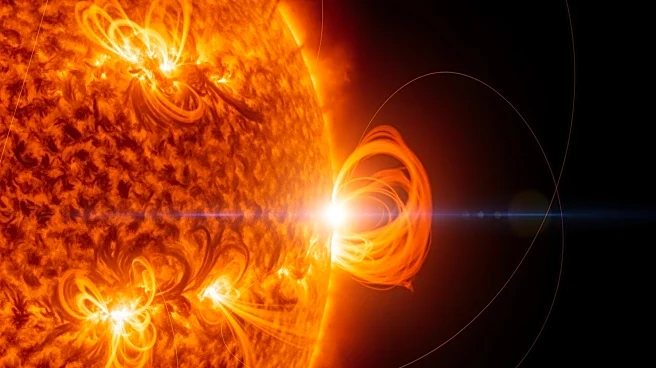
The Sun has released four significant solar flares, including an X8.1 flare, the strongest since October 2024. These flares originated from sunspot cluster RGN 4366, which is currently facing Earth. The flares are part of the Sun's active phase in its
11-year cycle, which has recently peaked. The NOAA's Space Weather Prediction Center warns that continued solar activity could lead to energetic particle events and coronal mass ejections (CMEs), which can impact Earth's satellites, power grids, and communication systems.
Why It's Important?
The recent solar flares highlight the ongoing volatility of space weather and its potential impact on Earth. CMEs associated with solar flares can disrupt satellite operations, GPS systems, and power grids, posing risks to technological infrastructure. As society becomes increasingly reliant on technology, understanding and preparing for space weather events is crucial. The flares also offer opportunities for scientific study and public engagement through phenomena like auroras.
What's Next?
The Space Weather Prediction Center anticipates more solar activity in the coming days. Monitoring and forecasting efforts will continue to assess the potential impacts on Earth's technological systems. Organizations responsible for satellite operations and power grid management may need to implement protective measures to mitigate disruptions. Public awareness campaigns could help inform and prepare communities for possible effects of heightened solar activity.