



What's Happening?
The Federal Communications Commission (FCC) has voted 2 to 1 in favor of easing restrictions on TV station ownership, allowing companies to own local stations covering more than 39% of the U.S. and more than two stations in a single market. This decision,
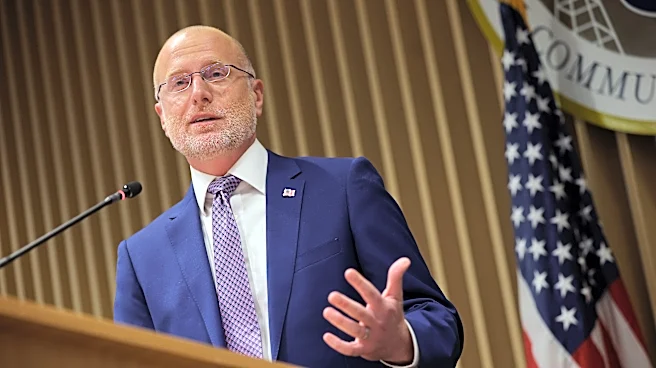
supported by FCC Chair Brendan Carr, aims to promote public interest by enabling station ownership groups to exceed the cap if deemed beneficial. Critics, however, are concerned that this move could favor media companies aligned with President Trump, such as Sinclair Broadcasting, while potentially punishing networks critical of him. The decision has sparked debate over the FCC's role in regulating broadcast content and its impact on free speech.
Why It's Important?
The FCC's decision to lift ownership limits could significantly alter the U.S. media landscape by enabling greater consolidation among TV station groups. This change may lead to fewer locally produced news programs, potentially diminishing the diversity of viewpoints available to the public. While proponents argue that the rule change will help broadcasters compete with tech giants like Google and Netflix, opponents fear it could lead to job losses and reduced media plurality. The decision also raises questions about the FCC's authority to modify ownership caps without congressional approval, potentially leading to legal challenges.
What's Next?
The FCC's decision is likely to face legal challenges from consumer groups and state officials concerned about media consolidation's impact on local journalism. Additionally, the rule change may influence ongoing antitrust litigation, such as the case against Nexstar's acquisition of Tegna. As the media industry adapts to these regulatory changes, stakeholders will closely monitor the FCC's application of the new rules and their effects on media diversity and competition.