






What's Happening?
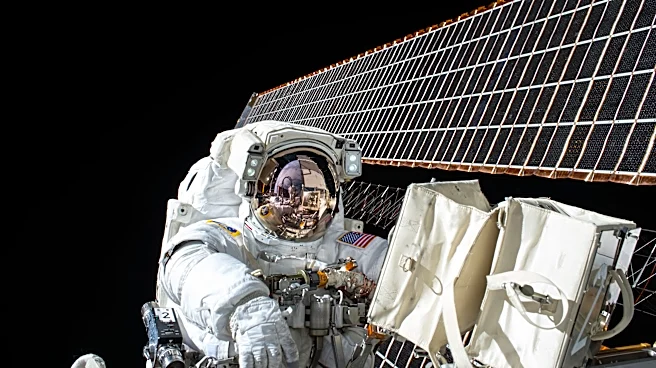
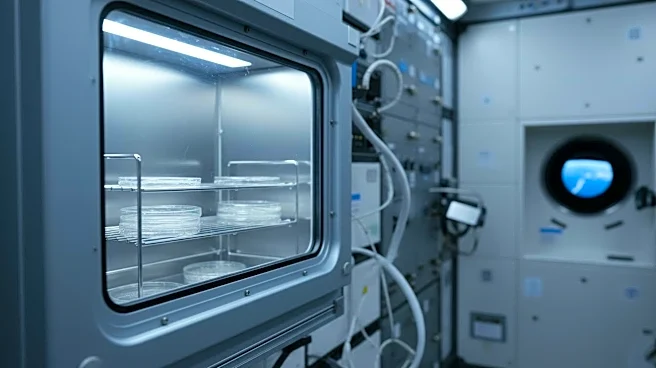
NASA's Expedition 74 crew aboard the International Space Station (ISS) has concluded a week of significant research activities, focusing on cartilage tissue growth in microgravity. NASA flight engineer Jessica Meir conducted experiments in the Kibo laboratory
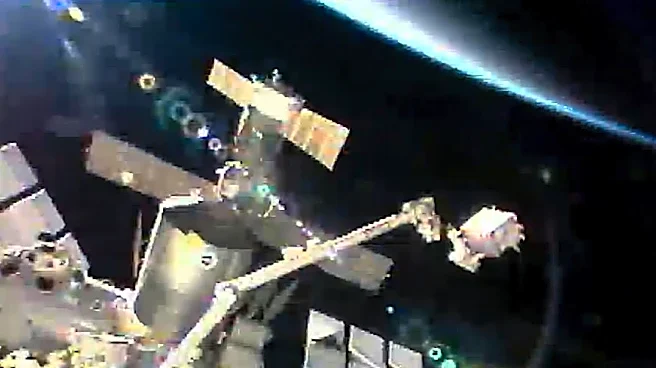
module's Life Science Glovebox, nurturing cartilage cell samples and preparing them for storage in a research incubator. This research aims to explore the engineering of cartilage tissues in space, which could lead to the development of self-repairing implants on Earth. Additionally, the crew engaged in cardiac research and cargo operations, with NASA flight engineer Chris Williams and Roscosmos flight engineer Sergei Mikaev performing neck, shoulder, and leg vein scans using the Ultrasound 3 device. This device, delivered by Northrop Grumman's Cygnus XL resupply ship, helps analyze the effects of microgravity on the human circulatory system. The ISS also underwent a reboost maneuver to adjust its orbit, preparing for the arrival of the Soyuz MS-29 spacecraft and its crew.
Why It's Important?
The research conducted on the ISS has significant implications for both space exploration and medical advancements on Earth. Understanding how cartilage tissues grow in microgravity could revolutionize medical treatments, potentially leading to the creation of self-repairing implants that could benefit patients with joint issues. Furthermore, the cardiac research being conducted could provide insights into preventing space-induced blood clots, enhancing the safety and health of astronauts on long-duration missions. These studies not only advance scientific knowledge but also have the potential to improve healthcare technologies and treatments on Earth, demonstrating the dual benefits of space research.
What's Next?
The ISS is preparing for the arrival of the Soyuz MS-29 spacecraft, which will bring new crew members to continue ongoing research and operations. As the Expedition 74 mission concludes, the focus will shift to integrating the new crew and continuing the scientific experiments that are crucial for future space missions and Earth applications. The results from the current research will be analyzed to further understand the effects of microgravity on human health and to develop new technologies that can be applied in both space and terrestrial environments.