



What's Happening?
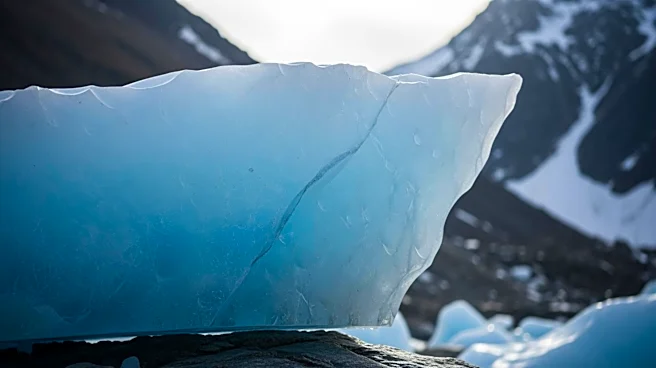
A massive and unstable ice block on the route above the Mount Everest base camp has forced hundreds of climbers and their guides to delay their ascent. The serac, located between the base camp and Camp One, poses a significant risk, prompting officials
to work with climbers and expedition organizers to assess the situation. With 410 foreign climbers holding permits for the spring climbing season, the delay affects a large number of individuals. The Sagarmatha Pollution Control Committee plans to conduct an aerial survey to evaluate the serac, hoping it will melt to a safer level.
Why It's Important?
The delay caused by the unstable ice block on Mount Everest highlights the inherent risks and challenges of high-altitude climbing. This situation underscores the importance of safety measures and the role of local guides, known as 'Icefall Doctors,' in ensuring climber safety. The delay impacts the climbing season's schedule, affecting climbers' plans and potentially leading to financial implications for expedition organizers. It also draws attention to the environmental changes affecting the Himalayas, as shifting glaciers and seracs become more common due to climate change.
What's Next?
As climbers and guides wait at the base camp, the focus will be on monitoring the serac's stability and conducting the planned aerial survey. Expedition organizers and climbers will need to adjust their schedules, and the situation may prompt discussions on improving safety protocols and infrastructure on Everest. The outcome of the survey will determine the feasibility of continuing the climbing season, with potential implications for future expeditions and the management of Everest's climbing routes.