




What's Happening?
Saeed Salehi, the Herman Brown Chair of Mechanical Engineering at SMU, has been awarded $19.3 million in federal funding from the U.S. Department of Energy, part of the department’s Mine of the Future initiative. With additional funding from industry
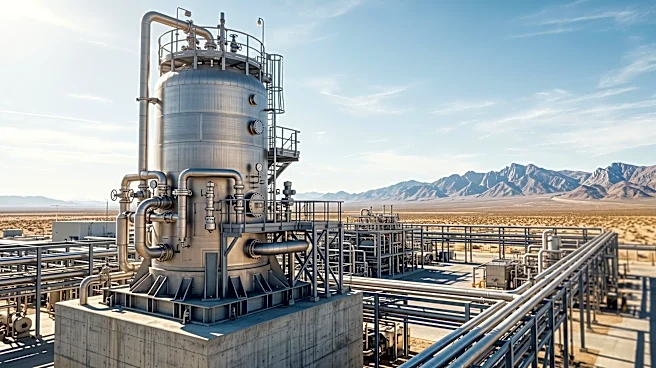
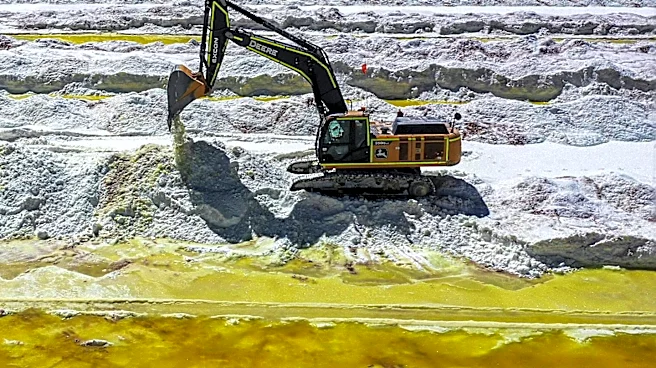
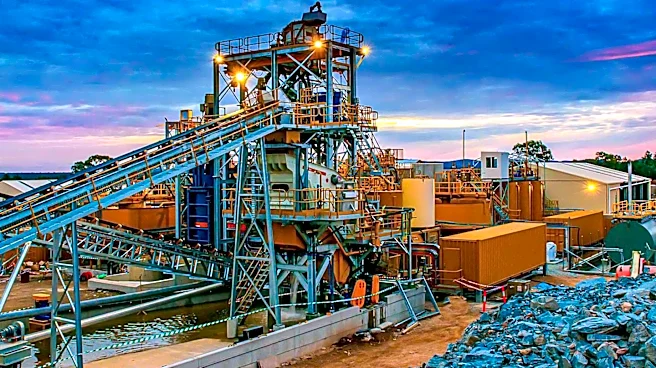
partners, Salehi's total research funding amounts to $25 million, marking the largest individual research funding commitment in SMU history. The project, named the Well-to-Mine Proving Ground, aims to adapt oil and gas fracking technologies for rare earth mining. Salehi plans to develop the world's first synthetic mine in Navasota, Texas, which will emulate real mining conditions to test these fracking technologies. This initiative seeks to address the U.S.'s reliance on foreign imports for over half of its rare earth metals and minerals consumption, which are crucial for manufacturing cell phones, computers, and cars.
Why It's Important?
The U.S. currently faces significant geopolitical risks due to its dependence on foreign countries for critical minerals and metals. Should these foreign governments halt exports, U.S. manufacturing of essential technologies could be severely impacted. Salehi's project is vital for enhancing domestic mining capabilities and reducing this vulnerability. By applying advanced fracking techniques to rare earth extraction, the research could revolutionize the efficiency and cost-effectiveness of obtaining these critical materials. This innovation is expected to strengthen the U.S.'s position in the global supply chain for advanced technologies, ensuring a more secure and independent source of rare earth elements essential for various industries, including defense and electronics. The project also highlights a national effort to catch up in mining technology, where the U.S. has reportedly fallen behind.
What's Next?
Salehi's research team will build the synthetic mine within a full-scale oil and gas drilling facility in Navasota, Texas. This synthetic mine will function as a 'digital twin' to showcase the capabilities of the new mining technologies and establish a foundation for predictive maintenance in the mining industry. The project will also involve significant student participation, with Salehi planning to hire at least 20 undergraduate students and recruit more in subsequent semesters. The sponsoring organizations will review project paperwork over the next six months, after which Salehi will have three years to complete his research. This initiative is part of a broader effort by the Department of Energy, which distributed $73 million in federal funding to four organizations to develop domestic testing grounds for new mining technologies.
Beyond the Headlines
This research project extends beyond immediate technological advancements; it addresses fundamental issues of national security and economic resilience. By developing innovative methods for rare earth extraction, the U.S. can mitigate supply chain disruptions and protect its technological leadership. The project also has significant educational implications, providing hands-on research opportunities for numerous students, thereby developing a skilled workforce for the future of the domestic mining industry. Furthermore, the application of fracking technology, traditionally associated with fossil fuels, to rare earth mining could spark broader discussions about interdisciplinary technological transfer and its potential to solve complex industrial challenges. This initiative underscores a strategic shift towards domestic resource independence and technological self-sufficiency in critical sectors.