






What's Happening?
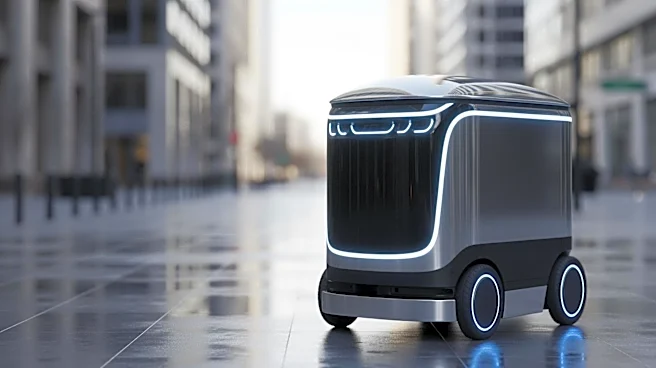
Chicago is witnessing a growing debate over the use of food delivery robots on its sidewalks. Concerns have been raised about safety and the allocation of public space, with critics arguing that these robots could disrupt pedestrian traffic and pose risks
to families, pets, and individuals with mobility challenges. The city has seen incidents where robots have obstructed sidewalks, causing inconvenience and potential hazards. A petition with over 4,350 signatures calls for a pause in the delivery robot program until a thorough impact assessment is conducted. Advocates for pedestrian-first policies emphasize the importance of preserving sidewalk space for human use, while proponents of the robots argue they could reduce car trips and emissions.
Why It's Important?
The introduction of delivery robots represents a significant shift in urban logistics and transportation. While they offer potential benefits such as reduced traffic congestion and lower emissions, they also raise questions about the prioritization of public space and pedestrian safety. The outcome of this debate could influence future urban planning and the integration of autonomous technologies in public areas. It highlights the need for balanced policies that consider both technological innovation and community well-being.
What's Next?
City leaders are expected to engage in discussions and possibly hold public hearings to address the concerns raised by residents. The decision on whether to continue, modify, or halt the delivery robot program will likely depend on the findings of impact assessments and public opinion. Stakeholders, including technology companies, urban planners, and community groups, will play a crucial role in shaping the future of delivery robots in Chicago.