




What's Happening?
The U.S. Justice Department has charged several Mexican officials, including Governor Rubén Rocha Moya of Sinaloa, with aiding the Sinaloa cartel in smuggling drugs into the U.S. in exchange for bribes. This development is part of a broader investigation
into high-level Mexican officials suspected of ties to organized crime. The charges have led to a political and criminal reckoning, affecting Mexico's ruling party and straining U.S.-Mexico relations. The U.S. has shifted its focus from targeting cartel leaders to prosecuting elected officials and law enforcement agents involved in organized crime.
Why It's Important?
This shift in U.S. policy marks a significant change in the approach to combating drug trafficking, as it targets political figures rather than just cartel leaders. The implications are profound for U.S.-Mexico relations, as it challenges the Mexican government's ability to combat corruption and maintain sovereignty. The charges could destabilize Mexico's ruling party, which campaigned on an anti-corruption platform, and may lead to increased tensions between the two countries. The move also reflects a broader strategy by the U.S. to address the systemic issues of corruption that facilitate drug trafficking.
What's Next?
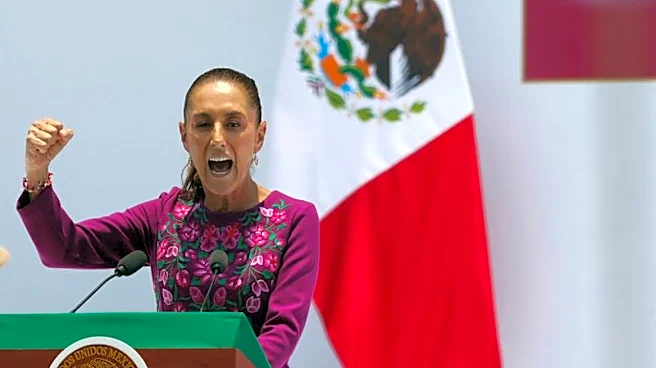
The ongoing investigations and potential prosecutions could lead to further diplomatic tensions between the U.S. and Mexico. Mexican President Claudia Sheinbaum has criticized the U.S. actions as electoral interference, suggesting that the investigations could influence upcoming elections in both countries. The U.S. may continue to pressure Mexico to extradite officials like Rocha Moya, while Mexico may resist such demands to assert its sovereignty. The situation could also impact the upcoming review of the U.S.-Mexico-Canada Agreement (USMCA), as security and trade issues become increasingly intertwined.