








What's Happening?
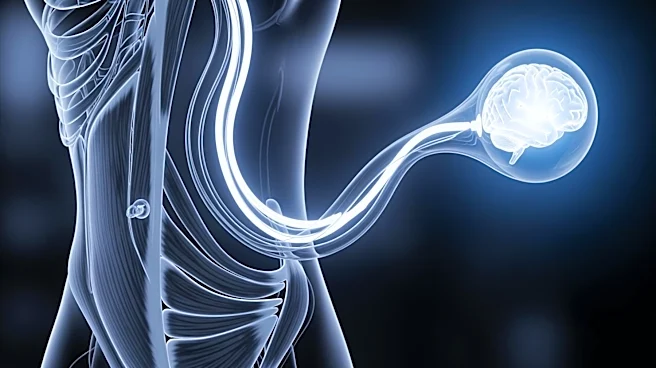
A recent study published in Nature Neuroscience has uncovered a mechanical connection between the abdomen and the brain, suggesting that abdominal muscle contractions can influence brain health. Researchers found that these contractions compress blood
vessels connected to the spine and brain, creating a hydraulic effect that moves the brain within the skull. This movement is believed to help wash away cellular waste, potentially benefiting brain health. The study involved observing 24 awake mice using two-photon microscopy to capture high-definition images of brain movement during abdominal contractions. The findings indicate that even minor physical activities, such as abdominal muscle contractions, can promote brain health by facilitating fluid flow in and around the brain.
Why It's Important?
This discovery highlights a previously underappreciated mechanical link between physical activity and brain health. The study suggests that regular movement, even at a minimal level, could play a crucial role in maintaining brain health by promoting the removal of waste products. This has significant implications for understanding how exercise can prevent neurodegenerative disorders associated with waste buildup in the brain. The research provides a new perspective on the physiological benefits of exercise, emphasizing the importance of physical activity in promoting cognitive health and potentially reducing the risk of conditions like Alzheimer's disease.
What's Next?
The researchers plan to further explore the fluid dynamics within the brain to understand how these movements can induce fluid flow and aid in waste removal. Future studies may focus on developing imaging techniques to visualize these rapid fluid flows and their impact on brain health. Additionally, the implications of these findings for human health will be investigated, potentially leading to new exercise recommendations or therapeutic strategies to enhance brain health through physical activity.
Beyond the Headlines
The study opens up new avenues for exploring the relationship between physical activity and brain health, challenging traditional views that focus solely on chemical and neural pathways. It also raises questions about the potential for targeted exercises to enhance brain function and prevent cognitive decline. The research underscores the importance of interdisciplinary approaches in understanding complex biological systems and their impact on health.