


What's Happening?
Senator Lisa Murkowski of Alaska raised concerns during a Senate Appropriations Committee hearing about the Trump administration's potential use of a supplemental appropriation for the Iran war as a substitute for explicit congressional authorization.
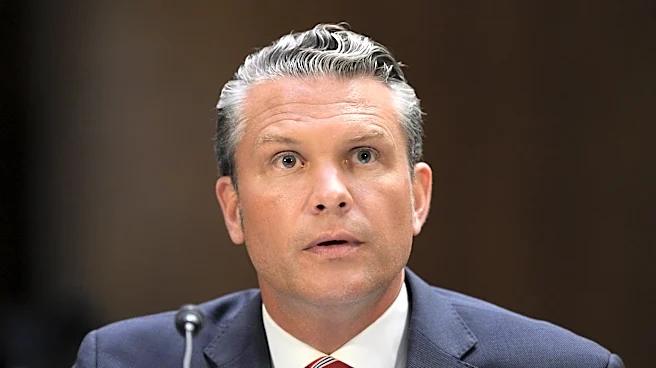
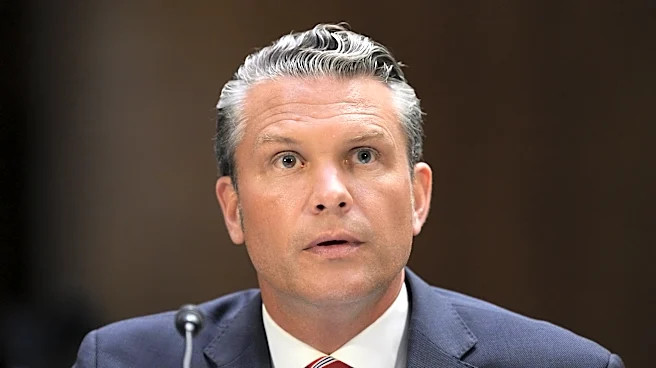
Defense Secretary Pete Hegseth testified about the Pentagon's request for $67.1 billion to fund the ongoing conflict. Murkowski referenced a 1999 opinion from the Clinton administration's Office of Legal Counsel, which suggested that funding could satisfy the War Powers Resolution requirement without explicit authorization. Hegseth deferred the question to the legal department, stating that the administration believes it has standalone Article Two authorities to conduct operations.
Why It's Important?
The issue of war authorization is significant as it touches on the balance of power between the executive and legislative branches. The Trump administration's approach could set a precedent for future conflicts, potentially allowing presidents to bypass Congress when engaging in military actions. This raises concerns about the erosion of congressional oversight and the potential for unchecked executive power in matters of war. The debate also highlights the ongoing tension between the need for rapid military response and the constitutional requirement for congressional approval.
What's Next?
The administration's request for additional funding will likely face scrutiny from both parties, with some lawmakers demanding clearer justification for the continued military engagement in Iran. The legal interpretation of funding as authorization may be challenged, prompting further debate and possible legislative action to clarify the War Powers Resolution. The outcome could influence future U.S. military engagements and the role of Congress in authorizing such actions.