






What's Happening?
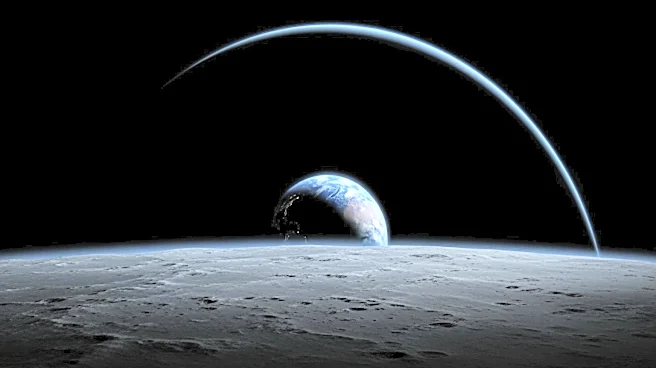
NASA's Artemis II mission has captured a stunning image of Earth setting behind the moon, reminiscent of the iconic 'Earthrise' photo from the Apollo 8 mission. The crew, consisting of Commander Reid Wiseman, Pilot Victor Glover, Mission Specialist Christina
Koch, and Canadian astronaut Jeremy Hansen, documented various lunar features such as impact craters and ancient lava flows. This mission marks the first time humans have traveled so far from Earth since the Apollo 17 mission, setting a new distance record for human spaceflight.
Why It's Important?
The Artemis II mission is a significant milestone in NASA's efforts to return humans to the moon and establish a sustainable presence there. The data and images collected during this mission will enhance our understanding of the moon's composition and history, providing valuable insights for future lunar exploration. The mission also demonstrates the capabilities of the Orion spacecraft and sets the stage for subsequent Artemis missions, which aim to land astronauts on the lunar surface and eventually pave the way for human exploration of Mars.
What's Next?
Following the successful completion of the Artemis II mission, the crew is expected to return to Earth with a splashdown near San Diego on April 11, 2026. The next steps in the Artemis program include Artemis III, which will test lunar landing systems, and Artemis IV, which aims to land astronauts near the moon's south pole by 2028. These missions will further NASA's goal of establishing a sustainable human presence on the moon and preparing for future missions to Mars.