




What's Happening?
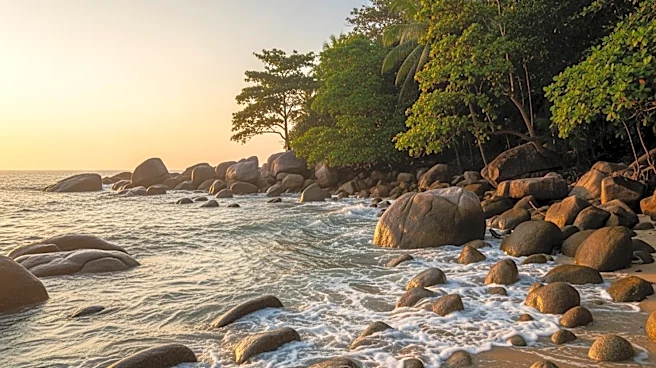
The fourth Thailand Biennale, held in Phuket, is showcasing a range of new art commissions that delve into the island's lesser-known histories and habitats. The event, titled 'Eternal [Kalpa]', features works spread across 19 venues, including failed
commercial buildings and Sino-Portuguese mansions. Notable installations include Ryuichi Sakamoto and Shiro Takatani's 'IS YOUR TIME', which uses a piano salvaged from a tsunami-hit school to explore themes of time and nature. Other works, such as Chatpong Chuenrudeemol and Eakapob Huangthanapan's 'MOTO-BAGADS', highlight the resilience of the Urak Lawoi sea-nomad community facing land-rights conflicts. The biennale also addresses the impact of tourism on Thailand's economy and ecology, with pieces like Eiji Sumi's 'Whisper of the Forest' and TOQA's fashion installation 'Like the sun, I love the sky'.
Why It's Important?
The Thailand Biennale is significant as it challenges the traditional image of Phuket as merely a tourist destination, instead highlighting its cultural and environmental complexities. By focusing on local histories and ecological issues, the biennale raises awareness about the impact of tourism on the island's natural resources and communities. This event not only promotes cultural engagement but also encourages sustainable tourism practices. The inclusion of works that address land-rights conflicts and environmental degradation underscores the need for policy changes to protect vulnerable communities and ecosystems. The biennale's exploration of these themes could influence future cultural and economic strategies in Thailand and similar tourist-dependent regions.
What's Next?
The biennale is expected to continue until April 2026, providing ongoing opportunities for dialogue and reflection on the themes presented. As the event progresses, it may prompt further discussions among policymakers, artists, and local communities about sustainable development and cultural preservation. The outcomes of these discussions could lead to initiatives aimed at balancing tourism with ecological and cultural conservation. Additionally, the biennale's success may inspire similar events in other regions, fostering a broader movement towards integrating art with social and environmental advocacy.
Beyond the Headlines
Beyond its immediate impact, the Thailand Biennale could contribute to a long-term shift in how art is used to address global issues. By integrating cultural narratives with environmental concerns, the event sets a precedent for future art exhibitions to serve as platforms for social change. This approach not only enriches the cultural landscape but also empowers communities to engage with and influence the policies that affect their lives. The biennale's focus on local artisans and traditional practices also highlights the importance of preserving cultural heritage in the face of globalization and economic pressures.