



What's Happening?
NASA is preparing for the launch of the Northrop Grumman Commercial Resupply Services 24 (CRS-24) mission, which will deliver over 11,000 pounds of science and supplies to the International Space Station (ISS). The mission is scheduled for April 8, 2026,
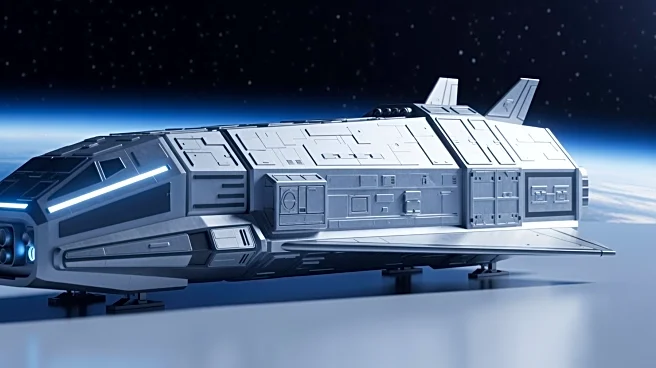
from Cape Canaveral Space Force Station in Florida, using a SpaceX Falcon 9 rocket. The Cygnus XL spacecraft, an expanded version of Northrop Grumman's previous cargo craft, will carry a variety of scientific research materials, including a new module for quantum science, hardware for stem cell production, and model organisms for gut microbiome studies. This mission is part of NASA's ongoing efforts to support scientific research aboard the ISS, which has been continuously inhabited for over 25 years.
Why It's Important?
The CRS-24 mission is crucial for maintaining the flow of scientific research and supplies to the ISS, which serves as a vital platform for experiments that cannot be conducted on Earth. The research facilitated by this mission could lead to advancements in computing technology, cancer treatment, and space weather modeling. Additionally, the mission underscores the importance of commercial partnerships in sustaining the ISS and advancing NASA's goals in space exploration. As NASA focuses on deep space missions, such as the Artemis program aimed at returning humans to the Moon and eventually Mars, commercial resupply missions like CRS-24 ensure that the ISS remains a hub for scientific discovery and international collaboration.
What's Next?
Following the launch, the Cygnus XL spacecraft will be captured by the ISS's Canadarm2 robotic arm and attached to the Unity module for cargo unloading. The spacecraft will remain at the ISS until October 2026, providing ample time for the crew to conduct experiments and utilize the delivered supplies. The success of this mission will likely influence future resupply missions and the continued collaboration between NASA and commercial partners. As NASA progresses with its Artemis program, the role of commercial entities in supporting low Earth orbit operations will become increasingly significant.