



What's Happening?
Becca Valle, a 41-year-old woman, has shared her remarkable survival story after being diagnosed with glioblastoma, a highly aggressive brain cancer. Initially experiencing debilitating headaches, Valle underwent a craniotomy that revealed a brain tumor.
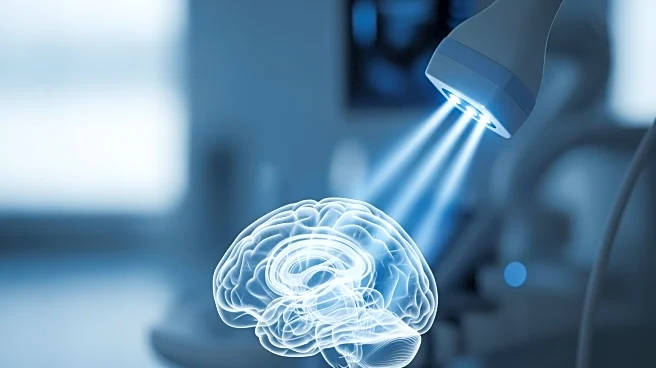
Following its removal, she participated in a clinical trial led by Dr. Graeme Woodworth at the University of Maryland Medical Center. The trial explored the use of focused ultrasound to temporarily open the blood-brain barrier, allowing chemotherapy drugs to penetrate the brain more effectively. Valle was one of 34 participants who received between three and six ultrasound treatments over six months. The study showed promising results, with up to 40% of participants surviving longer than expected. The trial's success has sparked further research into using this technique for other brain disorders.
Why It's Important?
The trial's findings are significant as they offer a potential new treatment avenue for glioblastoma, a cancer with a typically poor prognosis. The ability to open the blood-brain barrier safely could revolutionize how brain cancers are treated, allowing for more effective drug delivery. This development could lead to improved survival rates and quality of life for patients. The research also opens the door for further studies on other brain disorders, potentially benefiting a broader range of patients. The trial's success highlights the importance of innovative approaches in tackling complex medical challenges and could influence future treatment protocols and research funding priorities.
What's Next?
The University of Maryland is not currently offering the focused ultrasound treatment for glioblastoma, as the method and device are under FDA review. Ongoing studies aim to confirm and expand upon the initial findings, with hopes of developing an accessible device for clinical use. If approved, this technology could facilitate collaboration between doctors, pharmaceutical companies, and biotech firms to explore combination therapies for glioblastoma and other brain disorders. The research team is also investigating the potential of liquid biopsies to monitor brain cancer progression, which could lead to less invasive diagnostic methods.
Beyond the Headlines
The trial's success underscores the potential of non-invasive medical technologies in treating complex diseases. The ability to temporarily open the blood-brain barrier could have far-reaching implications beyond cancer treatment, potentially aiding in the management of neurological disorders like Alzheimer's and Parkinson's. This approach also raises ethical considerations regarding patient access to cutting-edge treatments and the need for equitable healthcare solutions. As research progresses, it will be crucial to address these issues to ensure that advancements benefit all patients.