




What's Happening?
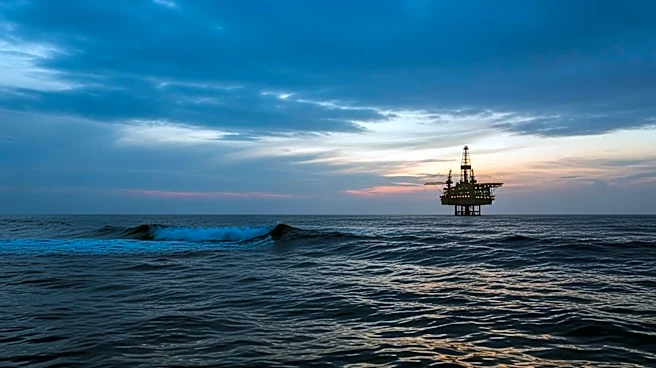
Japan has formally protested against China's construction of a new structure on the Chinese side of the East China Sea median line, which separates the two nations' waters. The boundaries of the Exclusive Economic Zone (EEZ) and continental shelf in the East China Sea remain
unresolved, with Japan advocating for the median line as the demarcation. Despite a 2008 agreement to jointly develop resources in the area, China has continued unilateral development, prompting Japan's protest. The Japanese Ministry of Defense has identified 22 Chinese offshore structures in the disputed area.
Why It's Important?
This development highlights ongoing tensions between Japan and China over territorial and resource rights in the East China Sea. The dispute has broader implications for regional stability and international maritime law. For the U.S., which has strategic interests in the region, the situation could affect diplomatic relations and security policies. The protest underscores the complexities of maritime boundary disputes and the challenges of resource management in contested areas.
What's Next?
Japan has called for China to cease its unilateral activities and resume negotiations. The situation may lead to increased diplomatic engagement or further tensions, depending on China's response. Regional stakeholders, including the U.S., may need to navigate the geopolitical implications carefully, balancing support for allies with broader strategic interests.