





What's Happening?
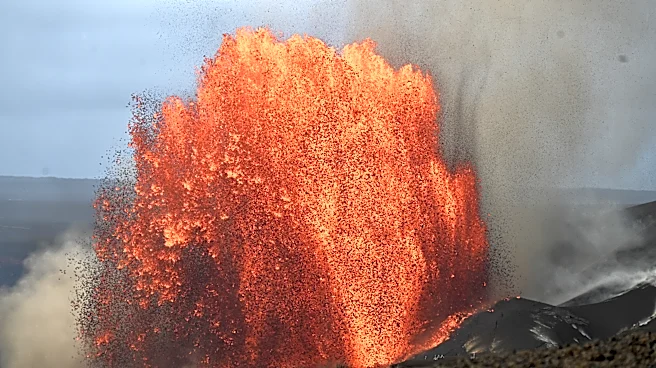
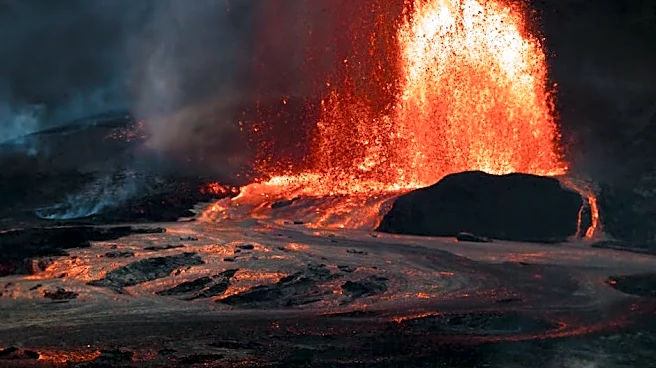
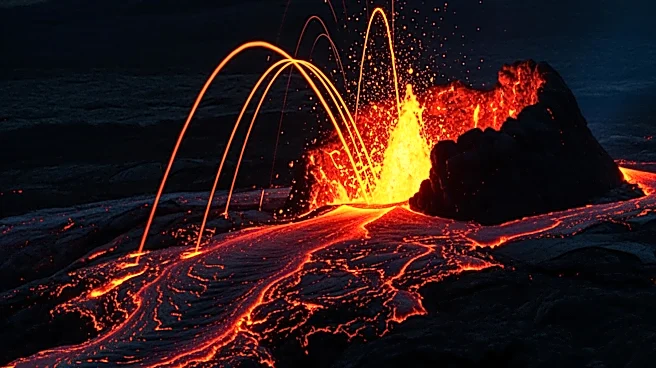
The Kīlauea volcano in Hawaii has set a new record for the number of lava fountaining episodes during a single eruption, according to the Hawaiian Volcano Observatory. Since the eruption began in December 2024, there have been 48 episodes of lava fountaining,
surpassing the previous record of 47 episodes that occurred during an eruption in the 1980s. The current eruption, which is ongoing, has been characterized by periods of intense lava fountaining followed by pauses. The lava is emanating from the same vents at the summit's crater, making it part of a continuous eruption. This activity is reshaping the summit's topography and is accessible for viewing by both residents and tourists. However, the volcanic activity poses risks to nearby communities due to the potential for volcanic fragments and ash, known as tephra, to impact the area.
Why It's Important?
The ongoing eruption of Kīlauea is significant for several reasons. Firstly, it highlights the dynamic nature of volcanic activity in the Pacific Ring of Fire, a region known for its geological volatility. The eruption's accessibility has made it a point of interest for tourists, potentially boosting local tourism. However, the eruption also poses risks to nearby communities, as volcanic ash and fragments can affect air quality and damage property. The reshaping of the summit's topography could have long-term implications for the local environment and ecosystem. Additionally, the eruption serves as a reminder of the need for continuous monitoring and preparedness in volcanic regions to mitigate potential hazards.
What's Next?
As the eruption continues, scientists and local authorities will likely maintain close monitoring of Kīlauea's activity to provide timely warnings and updates to the public. The potential for further lava fountaining episodes remains, and the impact on local communities will need to be assessed continuously. Efforts to manage tourist access safely while ensuring the protection of residents and infrastructure will be crucial. The ongoing geological changes at the summit may also prompt further studies to understand the long-term effects on the region's landscape and ecology.