

What's Happening?
The U.S. Coast Guard is actively searching for six individuals after losing contact with their vessel, the Mariana, following Typhoon Sinlaku's impact near Guam. The 145-foot dry cargo vessel, registered in the U.S., reported engine failure and requested
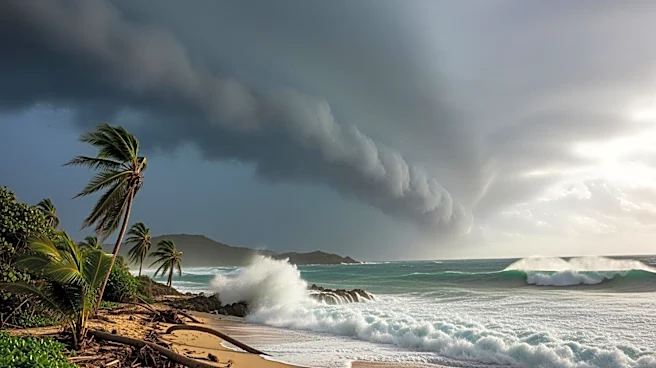
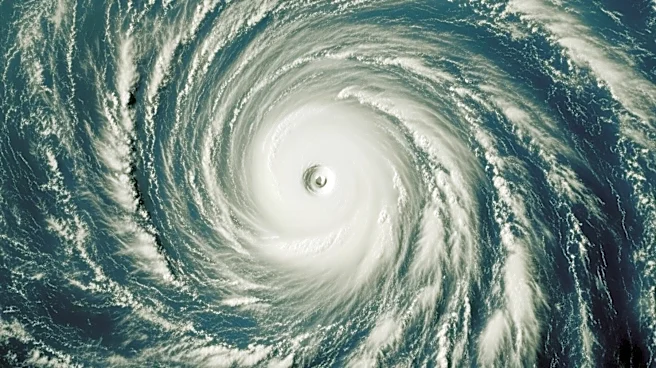
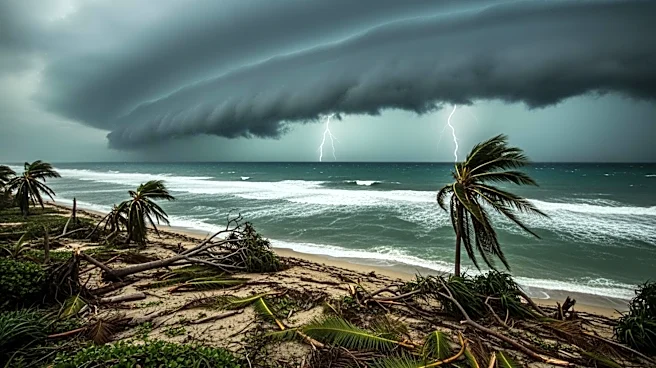
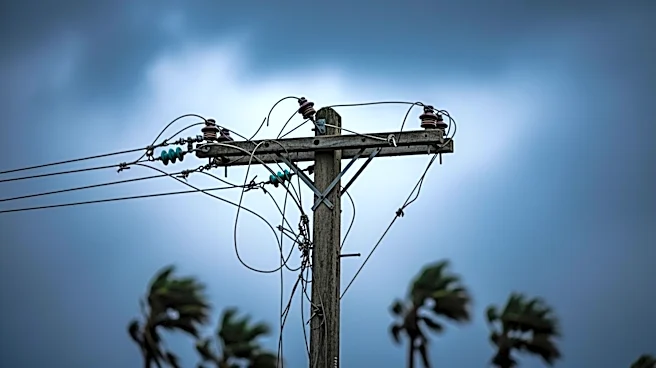
assistance on April 15. Despite establishing a communication schedule, contact was lost on April 16. A Coast Guard aircraft was deployed but had to return due to adverse weather conditions. The search is set to resume with improved weather. The typhoon, which has caused significant damage in the Northern Mariana Islands, is moving northeast and expected to weaken. However, hazardous sea conditions persist, with warnings issued for dangerous swells. Federal agencies, including FEMA, are coordinating responses to the disaster, focusing on restoring power and water systems.
Why It's Important?
The search for the missing crew highlights the ongoing challenges posed by severe weather events in the Pacific region, impacting both local communities and U.S. military operations. The typhoon's extensive damage underscores the vulnerability of island infrastructures to climate-related disasters. The involvement of multiple federal agencies in the response effort reflects the complexity and scale of the situation, emphasizing the need for robust disaster preparedness and response strategies. The incident also raises concerns about maritime safety and the resilience of supply chains in the face of natural disasters.
What's Next?
As the search for the missing crew continues, the focus will also be on assessing and repairing the damage caused by Typhoon Sinlaku. Federal agencies will likely remain engaged in long-term recovery efforts, addressing infrastructure damage and ensuring the safety of maritime operations. The reopening of ports and restoration of essential services will be critical to the region's recovery. Additionally, the event may prompt discussions on enhancing disaster preparedness and response capabilities in the Pacific islands.