




What's Happening?
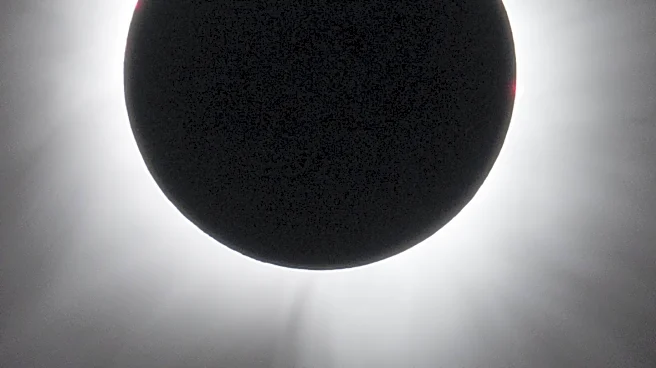
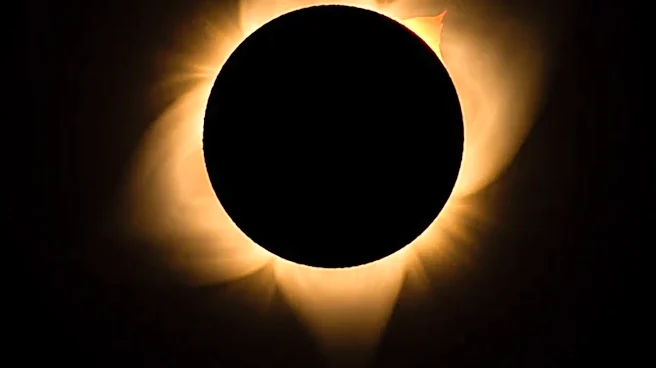
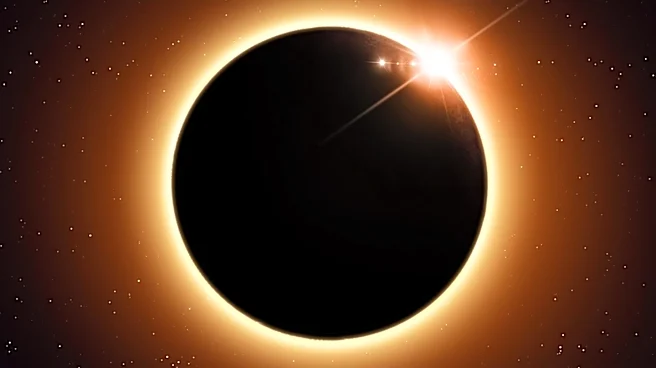
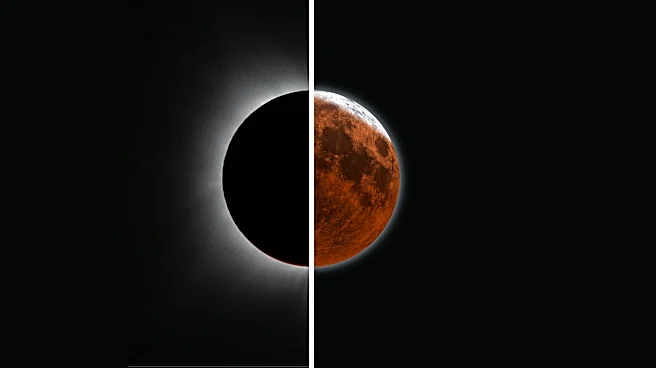
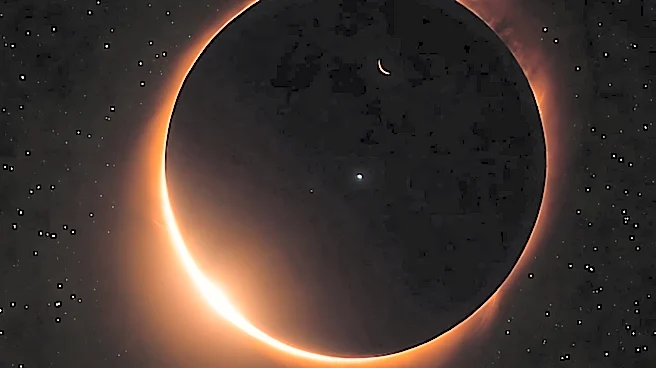
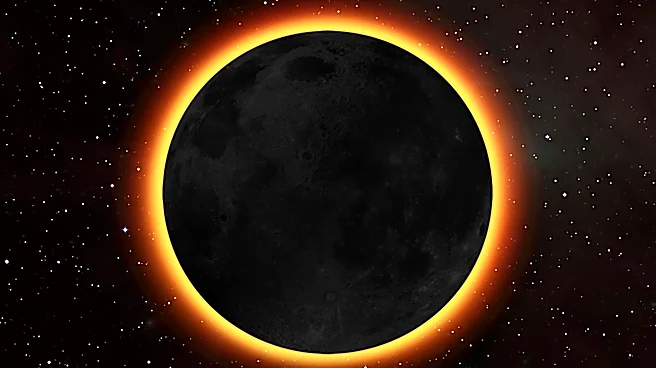
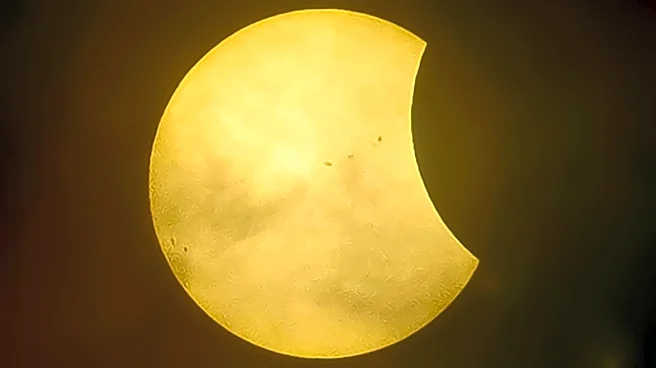
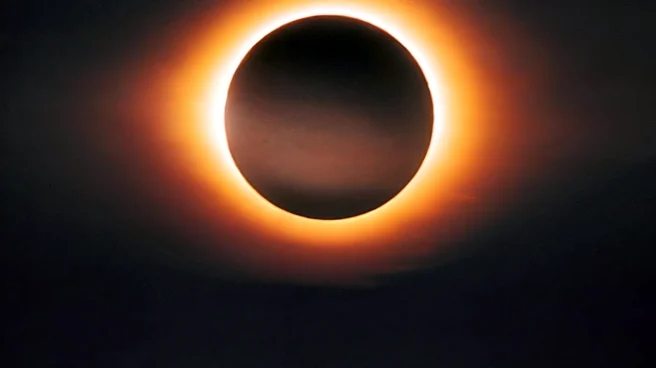
A total solar eclipse is set to occur on August 12, 2026, and will be visible across parts of Europe, Asia, and North America. The eclipse will be total in regions such as Greenland, Iceland, northern Russia, and parts of the Iberian Peninsula, marking
the first such event in over a century for some areas. The eclipse will also be partially visible in other parts of Europe and North America. The event is one of six total solar eclipses expected this decade, and NASA plans to broadcast it live, allowing people worldwide to witness the phenomenon.
Why It's Important?
Total solar eclipses are rare astronomical events that offer unique opportunities for scientific observation and public engagement. This eclipse provides a chance for researchers to study the Sun's corona and other solar phenomena. For the public, it is an opportunity to experience a natural spectacle that can inspire interest in astronomy and science. The event also has cultural significance, as eclipses have historically been seen as important omens or events in various cultures. The widespread visibility of this eclipse across multiple continents highlights the global nature of such astronomical phenomena.
What's Next?
NASA and other scientific organizations will conduct experiments during the eclipse to gather data on solar and atmospheric conditions. Educational institutions and observatories are likely to host viewing events and workshops to engage the public. The live broadcast by NASA will provide access to the eclipse for those outside the viewing area, enhancing global participation. The event may also lead to increased interest in future astronomical events, encouraging more people to explore the field of astronomy.