


What's Happening?
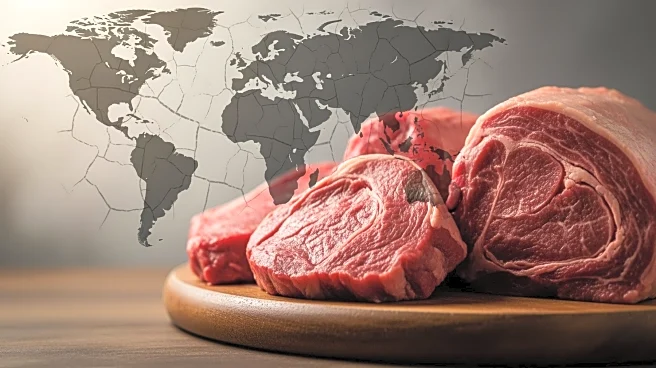
China has imposed new restrictions on beef imports to protect its domestic industry, significantly affecting global beef trade. The new measures include setting import quotas and maintaining a 55% additional tariff rate. In 2025, China imported substantial
amounts of beef from Brazil, Argentina, Uruguay, New Zealand, Australia, and the United States. However, U.S. beef exports to China have decreased sharply, with only 55,172 tons shipped through November 2025, less than half of the previous year's levels. This decline is partly due to the expiration of permits for American meat plants amid a trade conflict initiated by President Trump. Meanwhile, Australian beef exports to China have increased, filling the gap left by reduced U.S. imports. The Australian government and beef industry are assessing the implications of China's decision, which they find disappointing. Brazil, a major beef exporter to China, is also concerned about the potential loss of up to $3 billion in export revenue due to the new tariffs.
Why It's Important?
China's decision to curb beef imports has significant implications for the global beef market, particularly affecting U.S. and Brazilian exporters. The restrictions are part of China's strategy to support its domestic beef industry, which is facing challenges such as declining breeding cow inventory. For the U.S., the reduced export volume to China could exacerbate the existing beef shortage and contribute to rising beef prices domestically. This situation highlights the ongoing trade tensions between the U.S. and China, which have broader economic implications. For Brazil, the potential loss in export revenue could impact its agricultural sector, necessitating adjustments across the supply chain. The shift in trade dynamics also presents opportunities for other beef-exporting countries to increase their market share in China.
What's Next?
In response to China's import curbs, affected countries like Brazil and Australia are likely to seek compensatory measures or negotiate trade agreements to mitigate the impact. The U.S. may need to explore alternative markets for its beef exports or address the trade barriers with China to regain its market position. Additionally, the global beef industry may experience further price fluctuations as supply chains adjust to the new trade environment. Stakeholders in the beef industry, including producers and exporters, will need to closely monitor these developments and adapt their strategies accordingly.
Beyond the Headlines
China's import restrictions reflect a broader trend of countries implementing protectionist measures to safeguard domestic industries. This move could influence other nations to adopt similar strategies, potentially leading to increased trade barriers and affecting global trade relations. The situation also underscores the importance of diversifying export markets to reduce dependency on a single country. Furthermore, the rising beef prices could have social implications, affecting consumer affordability and dietary choices in various regions.