
What's Happening?
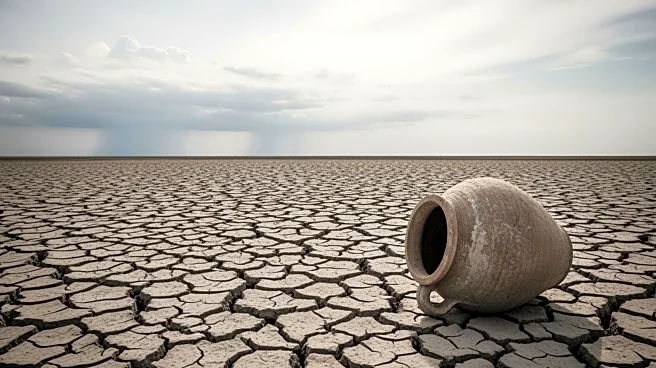
Recent rainfall in Tehran has temporarily alleviated the city's prolonged dry spell, but Iran's severe water crisis continues unabated. The country is experiencing its driest period in over fifty years,
with reservoirs and aquifers under significant strain. Despite the recent showers, officials warn that without substantial precipitation by the end of December, Tehran could face serious water supply instability. The government has initiated cloud-seeding operations to induce more rainfall, but longstanding issues such as inefficient agricultural practices, aquifer overextraction, and pipeline leaks exacerbate the crisis. The situation has led to public frustration and localized protests, with authorities considering partial evacuations if the water shortage persists.
Why It's Important?
Iran's water crisis poses significant risks to its domestic stability and regional security. The depletion of water resources threatens agricultural productivity, which could impact food security and economic stability. The crisis also affects energy production, as hydroelectric facilities struggle with low water levels. Public dissatisfaction is growing, leading to protests and potential social unrest. The government's ability to manage the crisis effectively is crucial to maintaining order and preventing further economic and social disruptions. The situation highlights the need for comprehensive water management reforms and infrastructure improvements to address the root causes of the crisis.
What's Next?
Without significant rainfall and reforms, Iran is likely to face ongoing water shortages that will impact drinking water availability, agriculture, and energy production. The government may need to implement more stringent water rationing measures and consider infrastructure investments to improve water management. Public pressure is expected to increase, potentially leading to more protests and demands for government accountability. The international community may also become more involved, as the crisis could have broader implications for regional stability and global food markets.
Beyond the Headlines
The water crisis in Iran underscores the broader challenges of climate change and resource management in the region. It highlights the need for sustainable agricultural practices and efficient water use to mitigate the impact of future droughts. The crisis also raises ethical questions about resource allocation and the responsibility of governments to ensure access to essential resources for their populations. Long-term solutions will require collaboration between government agencies, local communities, and international partners to develop resilient water management strategies.