




What's Happening?
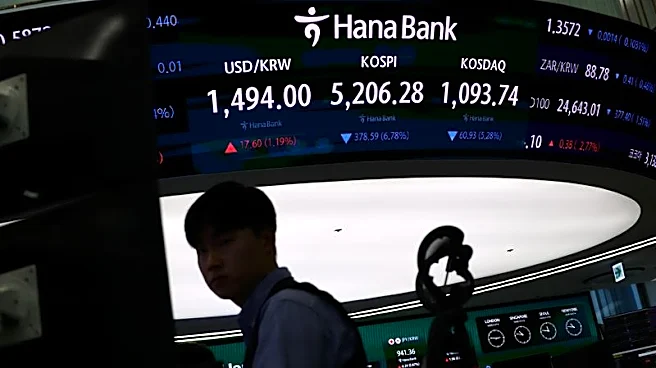
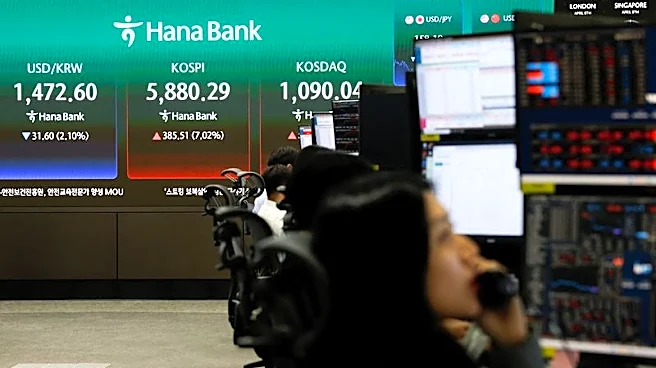
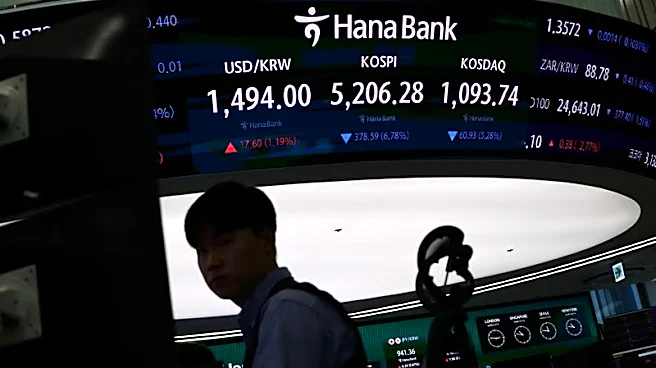
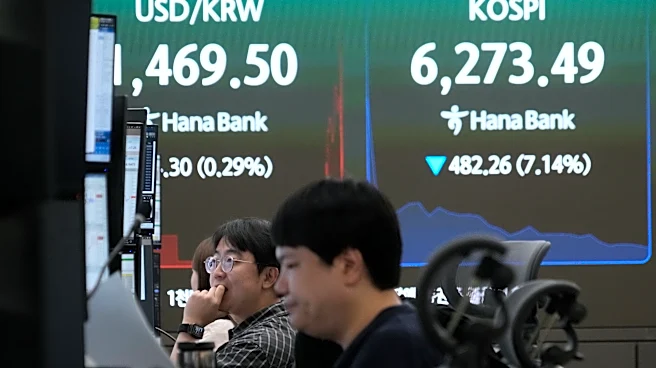
South Korea's stock market has experienced a significant downturn, with the KOSPI index dropping by as much as 12.6% in a single session, marking a record two-day fall. This decline has wiped out over 40% of the index's value from its peak just a month
ago, resulting in a loss of approximately $2.18 trillion in market value. The downturn is attributed to a sell-off in shares of chipmakers, which had previously surged due to investments in artificial intelligence. The South Korean government, led by Finance Minister Koo Yun-cheol, is reviewing market stabilization measures, including regulations on single-stock leveraged ETFs, which are believed to have contributed to the market's volatility. Emergency meetings are being held to address the situation, and further curbs on leveraged products are being considered.
Why It's Important?
The stock market rout in South Korea highlights the risks associated with leveraged trading and the volatility of markets driven by speculative investments in emerging technologies like AI. The significant loss in market value could have broader economic implications, affecting investor confidence and potentially leading to tighter financial conditions. The government's response, including potential regulatory changes, could impact the future of leveraged trading and the stability of financial markets in South Korea. This situation serves as a cautionary tale for other markets experiencing similar speculative bubbles, emphasizing the need for careful regulation and oversight.
What's Next?
The South Korean government is expected to implement further regulatory measures to stabilize the market, including setting individual investment limits and increasing trading costs for leveraged products. These actions aim to curb excessive trading activity and prevent future market disruptions. The financial authorities will continue to monitor the situation closely and may introduce additional emergency measures if necessary. The outcome of these regulatory changes will be closely watched by investors and could influence market behavior in the coming weeks.