







What's Happening?
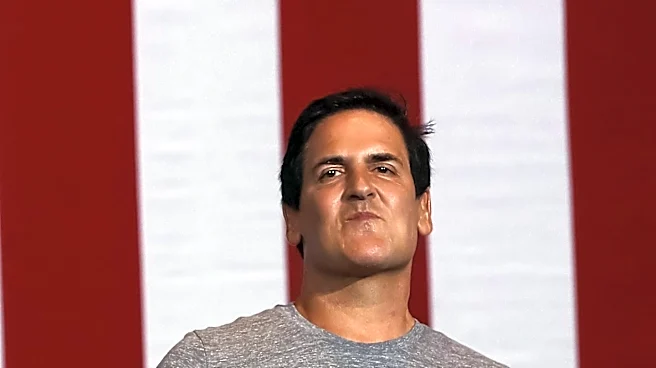
Mark Cuban, a prominent Dallas resident and entrepreneur, has publicly criticized Silicon Valley Congressman Ro Khanna's proposal for a California billionaire wealth tax, calling it 'insane.' Khanna's plan, which is on the ballot this November, suggests
a one-time 5% tax on billionaires' wealth in California. To address liquidity issues for those whose fortunes are tied up in illiquid assets, Khanna proposed that the government could provide loans in exchange for shares, with terms that are 'long but not infinite.' Cuban, who has supported Democratic candidates in the past but opposes the wealth tax, engaged in a lengthy exchange with Khanna on X, questioning the logic of the state loaning money to founders only for it to be immediately returned as tax, arguing it yields no incremental receipts for the state. Other prominent figures, including Anduril Industries co-founder Palmer Luckey and investor Bill Ackman, have also rebuked Khanna's suggestion. The proposal has already led to a costly campaign against Proposition 40 by California billionaires and has been endorsed by the state's Democratic Party, despite opposition from Governor Gavin Newsom and his would-be Democratic successor Xavier Becerra.
Why It's Important?
This debate highlights a significant ideological and practical divide within the Democratic Party and among wealthy individuals regarding wealth taxation. Khanna's proposal and Cuban's strong reaction underscore the contentious nature of wealth redistribution policies, particularly in states with high concentrations of wealth like California. The discussion about government loans for illiquid assets raises complex questions about the role of the state in managing private wealth and the potential for such mechanisms to create unintended consequences or moral hazards. The opposition from billionaires, including significant financial contributions to campaigns against the tax, indicates the powerful influence of economic stakeholders on policy decisions. If passed, this wealth tax could set a precedent for other states considering similar measures, potentially influencing the broader national conversation on economic inequality and taxation. Conversely, if it fails, it could signal the limitations of such progressive tax policies in the face of strong economic and political opposition. The outcome will likely impact California's economic landscape, potentially affecting investment, business relocation decisions, and the state's ability to fund public services.
What's Next?
The proposed one-time 5% tax on billionaires' wealth in California will be on the ballot this November as Proposition 40, meaning voters will ultimately decide its fate. The ongoing public debate, fueled by figures like Mark Cuban and Ro Khanna, is expected to intensify as the election approaches. Billionaires and their allies will likely continue their costly campaign against the measure, while progressive Democrats and healthcare unions will advocate for its passage. The outcome will depend on public sentiment, the effectiveness of campaigning from both sides, and how voters weigh the arguments about economic fairness, state revenue, and potential impacts on the business environment. If the tax passes, the implementation of Khanna's proposed loan mechanism for illiquid assets would face scrutiny and could lead to new legal and financial challenges. If it fails, it could prompt proponents to explore alternative methods for wealth redistribution or revenue generation. Regardless of the outcome, the discussion will likely continue to shape political discourse around wealth inequality and taxation in California and potentially across the United States.
Beyond the Headlines
The controversy surrounding California's proposed billionaire wealth tax extends beyond immediate fiscal policy to touch upon fundamental questions of economic philosophy, social contract, and the future of capitalism in the United States. Mark Cuban's 'insane' characterization of the loan proposal reflects a deep-seated concern among some entrepreneurs that such policies could stifle innovation and entrepreneurship by penalizing success and creating disincentives for wealth creation. The idea of the government becoming a shareholder in private companies through loan-for-shares arrangements raises ethical and practical dilemmas about state intervention in the private sector and potential conflicts of interest. This debate also highlights the growing political polarization around economic issues, with progressive factions advocating for more aggressive wealth redistribution to address inequality, while others warn of the economic repercussions. The potential exodus of billionaires from California, as suggested by Cuban, underscores the mobility of capital and the challenges states face in implementing policies that might be perceived as punitive by the wealthy. This situation could force a re-evaluation of how societies balance the need for public revenue and social equity with the desire to foster a dynamic and competitive economic environment.