



What's Happening?
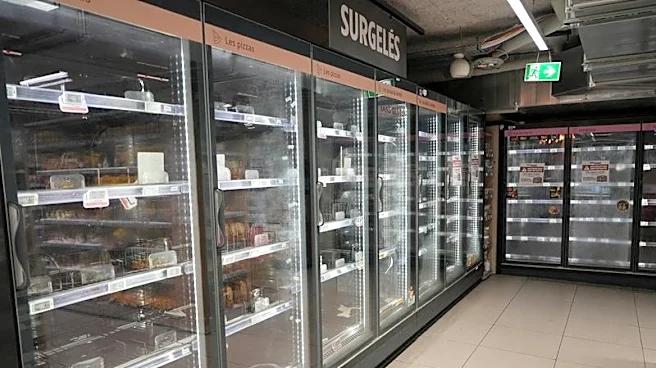
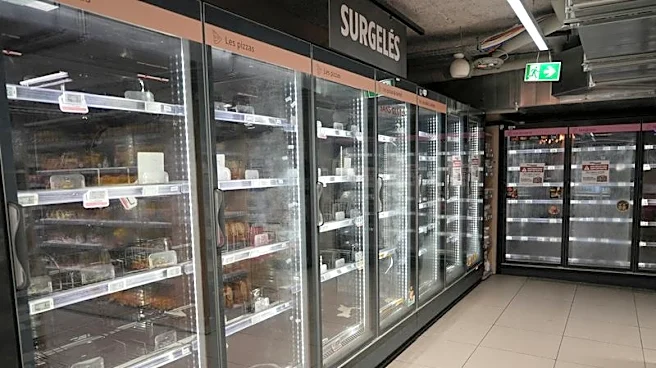
France has attributed a recent cyber-attack on supermarket freezers to hackers operating under the Islamic Revolutionary Guard Corps, a key branch of Iran’s military establishment. This attack caused some refrigerators to overheat and catch fire, leading
to widespread spoilage of food products. The French foreign minister described the incident as an act of 'unprecedented scale and unprecedented aggression' and announced plans for 'Europe-wide sanctions' against those responsible. This event follows similar, though unattributed, attacks on industrial freezers at an Israeli food production plant in May and malfunctions at U.S. military bases in August, which are now being investigated as suspected hacks. Cybersecurity experts note that the attacks were not particularly complex, often exploiting default passwords to gain access to fridge controls, a method consistent with Iranian cyber capabilities. The incident highlights a growing trend of hostile cyber operations from state-backed groups.
Why It's Important?
This incident is significant because it marks the first official attribution of this specific type of cyber-attack to Iran, directly linking a nation-state to disruptive actions against civilian infrastructure in a Western country. The targeting of supermarket freezers, while seemingly unsophisticated, demonstrates a willingness to cause economic disruption and public alarm. For the U.S., the mention of suspected hacks at military bases in August, now being re-evaluated in light of the French attribution, suggests a potential direct impact on national security and supply chain integrity. The broader context points to an escalating cyber landscape where critical infrastructure, both civilian and military, is increasingly vulnerable to state-sponsored attacks. This could lead to increased investment in cybersecurity measures across various sectors and potentially influence international relations and diplomatic responses to cyber warfare.
What's Next?
Following France's attribution, Europe-wide sanctions are expected to be imposed against those responsible for the cyber-attack. This move could escalate diplomatic tensions between European nations and Iran. The U.S. is likely to intensify its investigation into the suspected hacks at its military bases, potentially leading to its own attribution and response. Cybersecurity firms and governments will likely increase warnings and recommendations for strengthening defenses against similar attacks, particularly those targeting critical infrastructure. The incident may also prompt a re-evaluation of default security protocols for industrial control systems, as the simplicity of the attack vector (default passwords) suggests a widespread vulnerability that could be exploited by other state or non-state actors. The UK's national cybersecurity centre has already warned of a 'huge rise' in cyber incidents, partly due to advancements in AI, suggesting a more challenging future for cyber defense.
Beyond the Headlines
The cyber-attack on French supermarkets, and the suspected similar incidents in Israel and at U.S. military bases, underscore a shift in geopolitical strategy where cyber warfare is becoming a prominent tool for projecting power and signaling political displeasure. Unlike traditional military conflicts, cyber-attacks can be deniable, cost-effective, and capable of causing significant disruption without direct military engagement. This incident highlights the ethical dilemma of targeting civilian infrastructure, even with 'unsophisticated' methods, as it directly impacts public welfare and economic stability. The reliance on default passwords for critical systems reveals a systemic vulnerability that transcends national borders and industry sectors, raising questions about global cybersecurity standards and the responsibility of manufacturers and operators. This trend suggests a future where 'geoeconomic fragmentation' could be exacerbated by cyber-attacks, influencing trade, investment, and international cooperation.