





What's Happening?
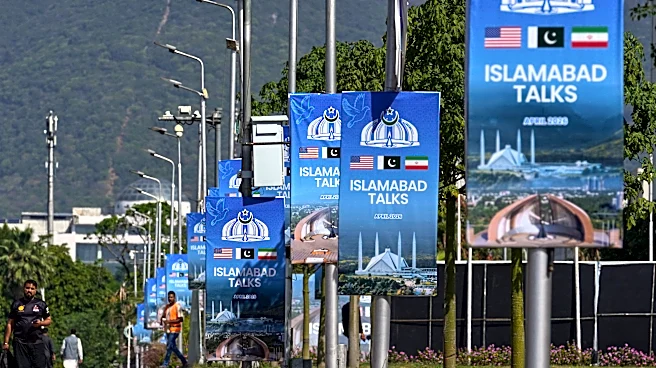
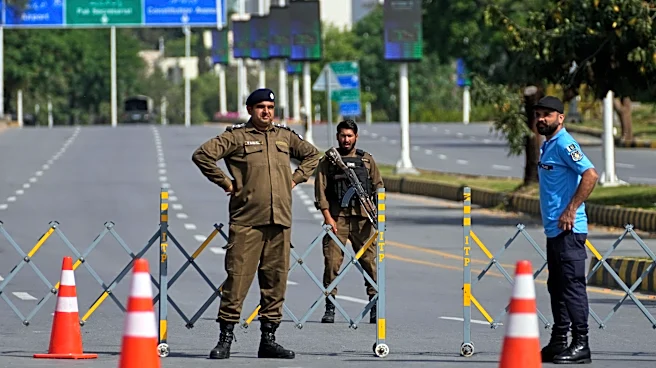
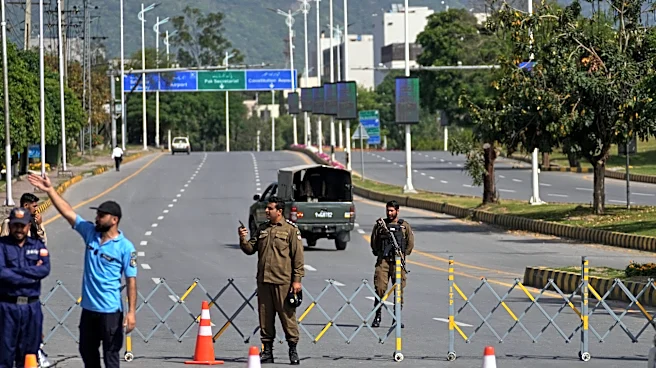
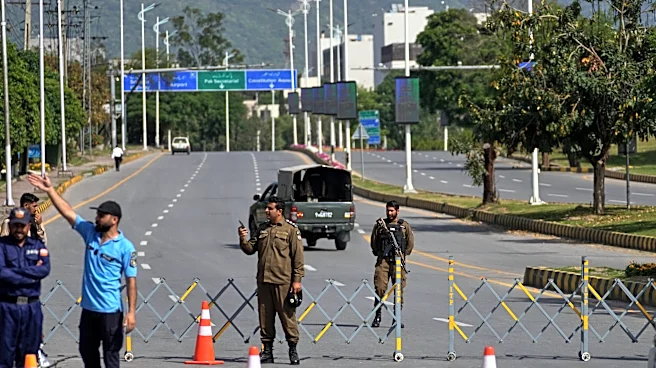
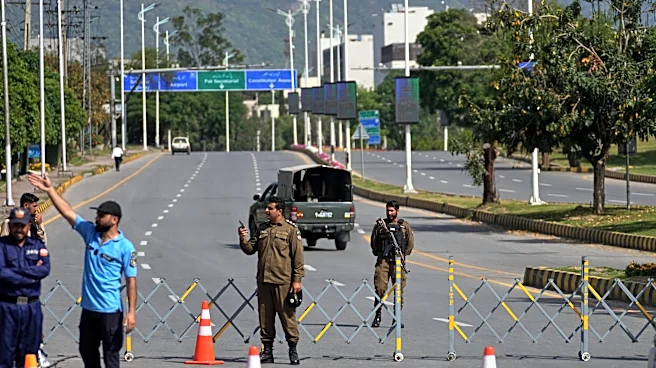
As the U.S.-Iran ceasefire deadline approaches, significant obstacles remain in the negotiations. Vice President Vance is expected to lead a U.S. delegation to Islamabad, but Iran has not confirmed its participation. The U.S. demands Iran limit its nuclear
program and open the Strait of Hormuz, while Iran seeks the lifting of the U.S. blockade and an end to Israeli attacks in Lebanon. The first round of talks ended without agreement, and President Trump has threatened military action if no deal is reached.
Why It's Important?
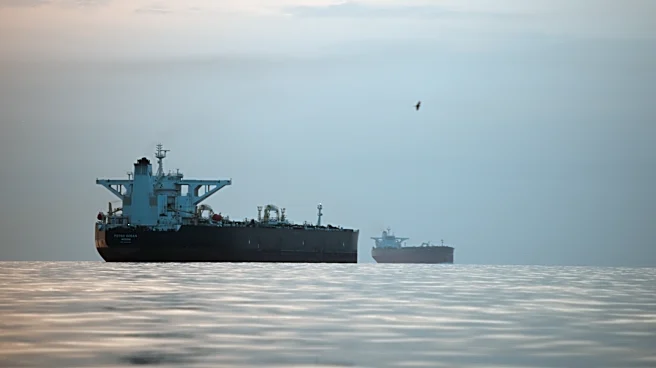
The situation is critical due to its potential impact on global security and economic stability. The Strait of Hormuz is a crucial route for oil transportation, and its closure has affected global oil prices. The U.S. aims to prevent Iran from acquiring nuclear capabilities, a major security concern. The conflict has broader implications for U.S. foreign policy and regional stability in the Middle East. The outcome of these talks could influence international relations and economic conditions, particularly in energy markets.
What's Next?
The immediate focus is on whether the ceasefire will be extended and if talks will proceed. The U.S. is prepared to resume military action if negotiations fail. The international community is watching closely, as any escalation could have widespread repercussions. The potential for a diplomatic resolution remains, but significant challenges persist. Both sides need to make concessions to reach an agreement, and the role of mediators like Pakistan is crucial in facilitating dialogue.