

What's Happening?
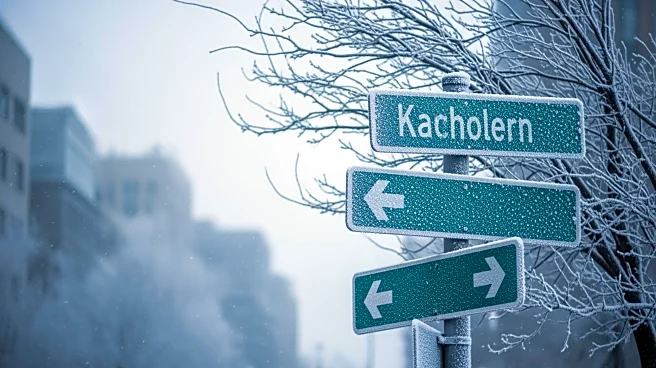
A major disruption to the polar vortex is expected to extend the extreme cold spell affecting millions in the eastern U.S. The polar vortex, which was displaced over Canada, has been sending frigid Arctic air into the U.S. This disruption, known as a Sudden
Stratospheric Warming Event, weakens the winds that usually confine cold air near the North Pole, allowing it to spill southward. Energy companies are urging conservation during peak usage times as the cold persists. The Climate Prediction Center forecasts below-average temperatures for February, potentially making this one of the coldest winters in years for the region.
Why It's Important?
The prolonged cold spell poses significant challenges for energy infrastructure and public safety. High energy demand could strain power grids, leading to outages and increased heating costs. The cold weather also impacts transportation, agriculture, and daily life, with potential economic repercussions. Understanding and predicting such weather patterns are crucial for preparing and mitigating their effects on society and the economy.
What's Next?
As the polar vortex continues to influence weather patterns, energy companies and local governments will likely focus on maintaining power supply and public safety. There may be increased emphasis on weather forecasting and infrastructure resilience to better handle such extreme conditions in the future.