


What's Happening?
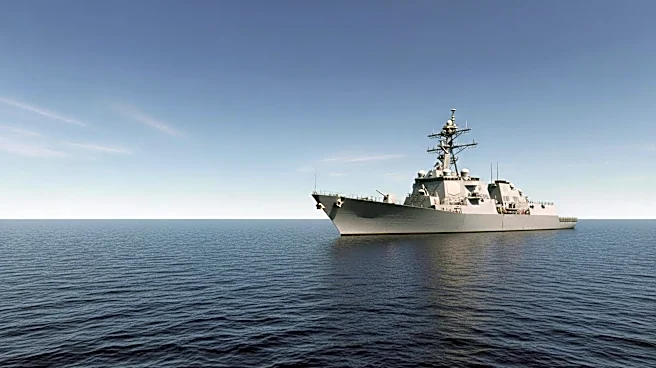
The guided-missile destroyer USS Benfold experienced a four-day power outage last month while deployed in the South China Sea due to an engineering problem. Commander Matthew Comer, a spokesperson for the Navy's 7th Fleet, confirmed the incident, stating
there were no injuries to the crew. The loss of power severely impacted essential services on board, including plumbing, meals, toilets, and air conditioning. The issue has since been resolved and is currently under investigation. The incident was not publicly disclosed for nearly a month. During the outage, the USS Benfold received direct support from the George Washington Carrier Strike Group and meals from the USS Robert Smalls. The vessel was eventually towed to Subic Bay, Philippines, for repairs, which were completed by August 7, allowing the ship to resume routine operations.
Why It's Important?
The power outage on the USS Benfold in the South China Sea is a significant event for U.S. naval operations and national security. The South China Sea is a strategically vital and contested region, making the vulnerability of a U.S. Navy destroyer without power a serious concern. This incident raises questions about the readiness and maintenance of naval assets, particularly those operating in sensitive international waters. It could prompt a review of engineering protocols, maintenance schedules, and contingency plans for U.S. Navy vessels. The delayed public disclosure of the incident also highlights issues of transparency and communication regarding military operations, potentially impacting public and congressional confidence in naval capabilities.
What's Next?
The U.S. Navy is currently investigating the engineering problem that led to the power outage on the USS Benfold. This investigation will likely aim to identify the root cause of the malfunction and implement corrective measures to prevent similar incidents in the future. Republican Rep. Don Bacon has called for congressional oversight, suggesting that top Navy officials may be required to testify. This could lead to increased scrutiny of naval maintenance and operational procedures. The incident may also influence future naval deployments and resource allocation, with a potential emphasis on enhancing the resilience and self-sufficiency of vessels operating in contested regions.
Beyond the Headlines
This incident underscores the complex challenges of maintaining a global naval presence, particularly in regions with geopolitical tensions like the South China Sea. The reliance on external support, such as tugboats and other vessels, during the power outage highlights potential logistical vulnerabilities. It also brings to light the human element of naval operations, as the crew endured difficult conditions without basic amenities for several days. The broader implications include discussions about the aging infrastructure of some naval vessels, the impact of long deployments on crew morale and equipment, and the strategic implications of naval power projection in an increasingly competitive maritime environment.