





What's Happening?
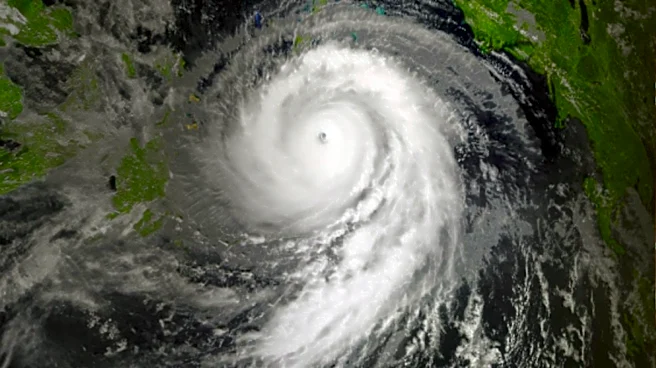
Typhoon Dolphin has struck Japan's southern island of Okinawa, resulting in injuries to five people and power outages affecting 14,000 buildings. The typhoon, which has caused flight cancellations in Okinawa, China, and Taiwan, is now moving towards eastern
China. Authorities in China have taken precautionary measures by shutting down ports, schools, and tourist sites. The typhoon, which originated as a tropical depression, has intensified over its journey across the Pacific Ocean. It is expected to make landfall along China's eastern and southern coasts, with heavy rain and strong winds anticipated to affect the region through August 12.
Why It's Important?
The impact of Typhoon Dolphin is significant as it disrupts daily life and economic activities in affected regions. In Japan, the power outages and flight cancellations highlight the vulnerability of infrastructure to severe weather events. As the typhoon approaches China, the shutdown of ports and suspension of rail services could have broader economic implications, affecting trade and transportation. The situation also underscores the challenges faced by countries in East Asia in managing natural disasters, particularly in the context of ongoing climate change and extreme weather patterns.
What's Next?
As Typhoon Dolphin continues its path towards China, authorities are on high alert, with emergency responses in place to mitigate potential damage. The typhoon's landfall is expected to bring heavy rainfall and strong winds, prompting further precautionary measures. The situation in Taiwan, where international flights have been canceled, remains closely monitored. The response from regional governments will be crucial in minimizing the impact on affected populations and infrastructure.