



What's Happening?
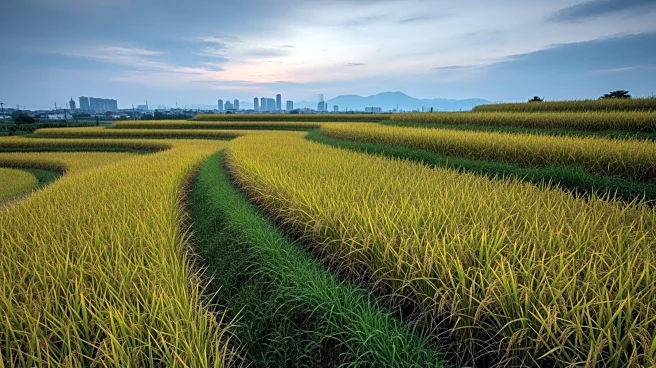
Nepal is experiencing a 4% decrease in rice production this year, attributed to urban migration, infrastructure development on arable land, and climate change. The Ministry of Agriculture and Livestock Development reported that rice cultivation contributes
significantly to the country's agricultural output, yet challenges such as labor shortages, irrigation issues, and adverse weather conditions have impacted production. The reduction in rice cultivation area and the lack of improved seeds and fertilizers during planting season have further exacerbated the situation. The country's reliance on rice as a staple food and the increasing import of rice highlight the pressing need for sustainable agricultural practices.
Why It's Important?
The decline in rice production in Nepal has significant implications for food security and economic stability. As rice is a staple food for the population, reduced production could lead to increased imports, affecting the country's trade balance and economic resilience. The challenges faced by the agricultural sector, including climate change and urbanization, underscore the need for policy interventions to support sustainable farming practices and improve resource management. Addressing these issues is crucial for ensuring food security and supporting the livelihoods of millions who depend on agriculture.