





What's Happening?
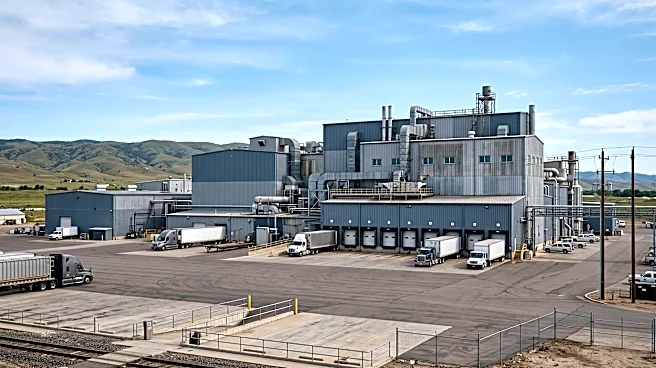
The Idaho Department of Environmental Quality (DEQ) has released its IPDES permit issuance plan for 2027, identifying several industrial facilities as high-priority for permit renewals. Among these is Seneca Foods' food processing facility located in Payette,
Idaho. The plan outlines a ranking system used by the DEQ to prioritize the issuance of these permits. In addition to food processing, the high-priority industrial list includes various mining and forest product facilities. Specifically, mining operations such as Sunshine Silver Mining and Refining and Hecla Star/Morning Mining are listed, alongside forest product facilities like Clearwater Paper and Bennett Lumber Products. The DEQ's plan also indicates a significant backlog of administratively extended municipal wastewater treatment facility permits that require renewal or re-issuance, highlighting a broader effort by the department to update and manage environmental permits across the state.
Why It's Important?
The designation of Seneca Foods' Payette facility as a high-priority for an IPDES permit underscores the increasing regulatory scrutiny on industrial operations in Idaho, particularly those with significant environmental footprints. For Seneca Foods, this means navigating a potentially complex and time-consuming permit renewal process, which could impact operational costs and compliance strategies. The IPDES (Idaho Pollutant Discharge Elimination System) permits are crucial for regulating wastewater discharges, ensuring that industrial activities do not adversely affect water quality and public health. This focus on permit renewals reflects a broader trend of environmental agencies strengthening oversight to protect natural resources. The inclusion of other major industries like mining and forest products suggests a comprehensive approach by the Idaho DEQ to update environmental standards and ensure compliance across key economic sectors, potentially setting new benchmarks for environmental responsibility in the state.
What's Next?
Seneca Foods' Payette facility will proceed with the IPDES permit renewal process as outlined by the Idaho DEQ's 2027 plan. This will likely involve detailed assessments of their current discharge practices, potential upgrades to wastewater treatment systems, and adherence to any new or revised environmental standards. The DEQ's focus on high-priority permits indicates that these facilities will be among the first to undergo review, potentially leading to more stringent conditions or requirements. Other industrial facilities on the high-priority list, including those in mining and forest products, will also face similar processes. The overall effort by the DEQ to address its backlog of municipal permits suggests a concerted push towards comprehensive environmental regulation across Idaho, which could lead to a more standardized and rigorous permitting landscape for all entities in the coming years.
Beyond the Headlines
The Idaho DEQ's prioritization of IPDES permits for facilities like Seneca Foods highlights a growing emphasis on environmental accountability within industrial sectors. This move could signal a shift towards more proactive environmental management, where companies are expected to not only comply with existing regulations but also to continuously improve their environmental performance. The process of permit renewal often involves public review and stakeholder engagement, which can increase transparency and pressure on companies to adopt sustainable practices. For the food processing industry, this could mean investing in advanced water treatment technologies and exploring ways to minimize waste discharge. Ultimately, this regulatory push could foster a more environmentally conscious industrial landscape in Idaho, influencing long-term operational strategies and potentially driving innovation in pollution control and resource management.