







What's Happening?
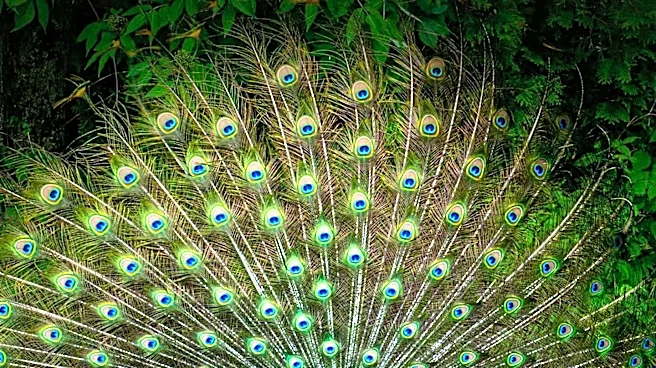
Peacocks, while not predators, can exhibit defensive behaviors that may lead to injuries in humans and damage to property, according to animal behavior experts. These birds possess sharp beaks, strong legs, and leg spurs that can exceed an inch in length,
which they use when feeling threatened or startled. Aggression is more commonly observed during mating season, when male peacocks may perceive reflections in car mirrors or polished bumpers as rival males, leading to pecking and potential damage to vehicles. Additionally, nesting peahens may become defensive if approached too closely. While attacks are rare, they can result in painful scratches, punctures, and bruising. Children are particularly vulnerable to being startled, and any skin-breaking injury carries a risk of infection.
Why It's Important?
The potential for peacock aggression has implications for public safety and property owners in areas where these birds are present. Understanding peacock behavior is crucial for preventing negative encounters. Property owners, especially those with reflective surfaces on vehicles or buildings, may need to take precautions during breeding season to avoid damage. For individuals, particularly families with young children, knowing how to safely interact with peacocks—maintaining distance and avoiding sudden movements—is vital to prevent injuries. The presence of peacocks in residential or public spaces necessitates awareness and responsible management to ensure the safety of both humans and the birds, highlighting the need for public education on wildlife interaction.
What's Next?
To mitigate potential risks, individuals and communities in areas with peacock populations should prioritize education on safe interaction practices. This includes advising against hand-feeding, maintaining a respectful distance, and being aware of increased territoriality during mating season. Property owners might consider protective measures for reflective surfaces on vehicles or windows to deter aggressive pecking. Local wildlife authorities or property managers may need to address recurring aggressive encounters to ensure public safety. Continued observation of peacock behavior and community engagement can help in developing effective strategies for coexisting with these birds, minimizing the likelihood of injury or property damage.
Beyond the Headlines
The interaction between humans and peacocks extends beyond immediate safety concerns, touching upon broader themes of wildlife management in increasingly urbanized environments. As human habitats expand, encounters with wildlife become more frequent, necessitating a reevaluation of how we coexist with various species. The case of peacocks highlights the challenge of managing animals that, while aesthetically pleasing, can pose risks when their natural behaviors conflict with human activities. This situation underscores the importance of respecting wildlife's natural instincts and territories, rather than treating them as domesticated pets. It also raises questions about the ethical responsibilities of individuals and communities in protecting both human safety and animal welfare in shared spaces.