






What's Happening?
The Federal Emergency Management Agency (FEMA) and the Florida Division of Emergency Management are reviewing an application for federal grant funding for Pinellas County's Sanitary Sewer Pump Station Infrastructure Retrofit. This funding is being considered
through the Hazard Mitigation Grant Program, authorized by Section 404 of the Robert T. Stafford Disaster Relief and Emergency Assistance Act. Pinellas County proposes to enhance the flood protection of 35 critical wastewater pump stations by elevating electrical panels above the Base Flood Elevation (BFE) to achieve a 500-year level of protection. These pump stations have historically experienced failures due to submerged electrical components during storm events. The project aims to ensure continuous operation of these stations during future storms, thereby maintaining sanitary sewer services and safeguarding public health. Alternatives considered and deemed not viable include a 'no action' approach, which would perpetuate flood risks and service interruptions, and the installation of submersible panels, which do not fully address electrical improvements and carry risks of seal failure and moisture damage.
Why It's Important?
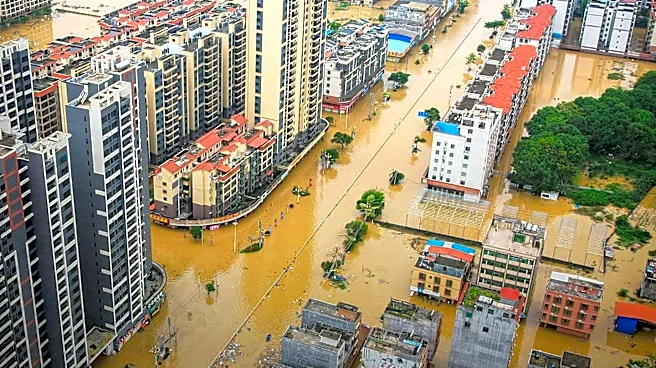
This initiative is crucial for enhancing the resilience of critical infrastructure in Pinellas County, a region vulnerable to storm-related flooding. The repeated failure of sanitary sewer pump stations during past storm events poses significant public health risks due to potential sewage overflows and environmental contamination. By upgrading these facilities, FEMA's potential funding would directly contribute to the continuity of essential services, reducing the likelihood of costly emergency repairs and long-term environmental damage. The project aligns with federal efforts to promote hazard mitigation and build more resilient communities against natural disasters. For residents, it means more reliable wastewater services and reduced exposure to health hazards during severe weather. For local government, it represents a proactive approach to infrastructure management, potentially lowering future disaster recovery costs and improving overall community safety and well-being.
What's Next?
A public comment period is currently open for this proposed project, allowing local, state, federal agencies, and other interested parties to submit feedback. Comments must be submitted in writing to the Florida Division of Emergency Management, Bureau of Mitigation, within 15 days of the notice (by November 18, 2026). The State will then forward these comments to relevant regulatory agencies for consideration. Following the public comment period and environmental review under the National Environmental Policy Act (NEPA), FEMA will make a final decision on providing the Hazard Mitigation Grant Program funding. If approved, the project will proceed with the installation of elevated electrical panels at the specified pump stations. Funding will be contingent upon compliance with all applicable federal, tribal, state, and local laws, regulations, floodplain standards, and permit requirements.
Beyond the Headlines
This project highlights a broader national challenge of adapting existing infrastructure to the increasing frequency and intensity of extreme weather events. The focus on elevating electrical components above flood levels reflects a strategic shift from post-disaster recovery to pre-disaster mitigation, emphasizing long-term resilience. The consideration of alternatives, such as the 'no action' and submersible panel options, underscores the rigorous evaluation process required for federal funding, ensuring that proposed solutions are both effective and sustainable. This approach also brings to light the interconnectedness of public health, environmental protection, and infrastructure reliability, demonstrating how investments in one area can yield significant benefits across multiple sectors. The project could serve as a model for other coastal communities facing similar vulnerabilities, illustrating best practices in flood mitigation for critical wastewater systems.