





What's Happening?
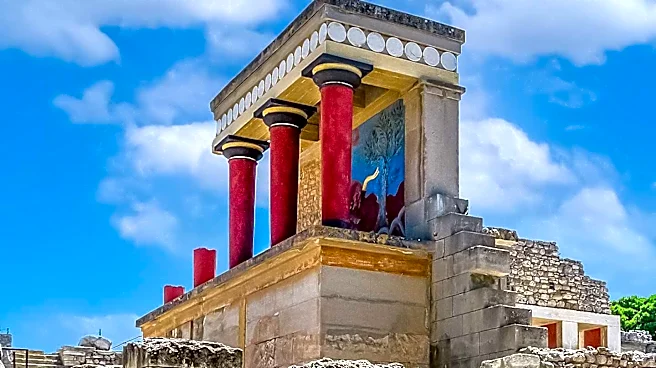
Virtual reconstructions of ancient sites are expanding into the metaverse, offering persistent, interactive digital environments. One such project focuses on the Palace of Knossos in Crete, a significant archaeological site linked to the Minoan civilization
and the myth of the Minotaur's labyrinth. These metaverse recreations aim to allow users to explore the palace at various historical points, moving through courtyards, corridors, and ceremonial spaces. Interactive displays will explain archaeological interpretations, provide historical timelines, and compare surviving structures with reconstructed architectural features. The digital models are built using detailed archaeological information, including photogrammetry, 3D scanning, excavation records, and architectural analysis. This approach allows for a dynamic educational tool, distinguishing between documented structures and hypothetical features, and even incorporating mythological narratives as a separate interactive layer.
Why It's Important?
The development of metaverse recreations for ancient sites like Knossos holds significant implications for education, cultural preservation, and accessibility. It provides a unique opportunity for individuals globally to experience and learn about historical sites that might otherwise be inaccessible due to geographical or physical limitations. This technology can transform how history and archaeology are taught, offering immersive and interactive learning experiences that go beyond traditional textbooks and static exhibits. For cultural institutions, it opens new avenues for engagement and revenue generation, potentially attracting a broader audience to historical narratives. However, it also raises important considerations regarding historical accuracy, as developers must clearly distinguish between archaeological evidence, mythological storytelling, and artistic interpretation to avoid creating a false sense of certainty about historical reconstructions.
What's Next?
Future developments in metaverse recreations will likely focus on enhancing historical transparency and educational value. This includes incorporating source notes, uncertainty labels, and clear explanations of reconstruction methodologies to ensure accuracy. The long-term maintenance of these digital environments will also be a critical challenge, requiring ongoing updates to adapt to evolving software platforms, hardware, and digital formats. As the technology matures, there could be increased collaboration between archaeologists, historians, digital artists, and educational institutions to create more sophisticated and accurate virtual experiences. The integration of accessibility features, such as subtitles, audio descriptions, and multiple language options, will also be crucial to maximize the reach and impact of these digital cultural heritage projects.
Beyond the Headlines
The emergence of metaverse recreations for ancient sites touches upon deeper implications concerning the nature of historical understanding and cultural heritage in the digital age. It challenges traditional notions of authenticity and preservation by offering virtual experiences that can be both highly immersive and potentially interpretive. The ability to separate archaeological evidence from mythological narratives within these digital spaces highlights a nuanced approach to presenting history, allowing for both factual learning and engagement with cultural storytelling. This trend could lead to a re-evaluation of how cultural heritage is consumed and valued, potentially fostering a more interactive and personalized connection to the past, while also necessitating a critical approach to the information presented in these highly curated digital environments.