
What's Happening?
Consumer confidence in the U.S. has plummeted to a record low, as reported by a University of Michigan survey. The headline index of consumer sentiment fell to 47.6 in April, marking a 10.7% decrease from
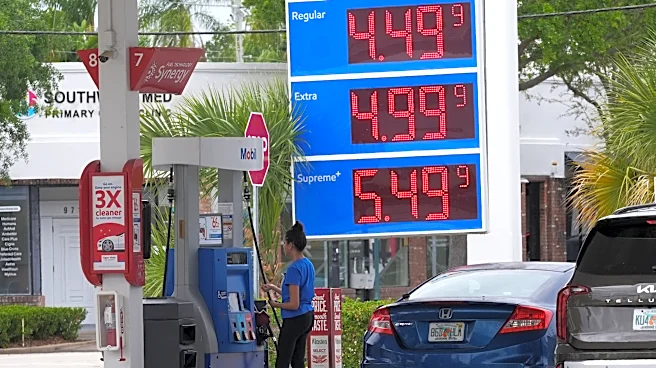
March. This decline is attributed to rising energy prices and the ongoing conflict with Iran. The survey indicates that inflation expectations have surged, with respondents anticipating a 4.8% increase in prices over the next year. The Bureau of Labor Statistics also reported a 0.9% rise in the consumer price index for March, leading to a 3.3% annual inflation rate, primarily driven by energy costs. Despite a ceasefire on April 7, the survey reflects conditions prior to this date, suggesting that consumer sentiment may improve as supply disruptions ease and gas prices stabilize.
Why It's Important?
The record low in consumer sentiment highlights the significant impact of geopolitical tensions on the U.S. economy. Rising energy prices, exacerbated by the conflict with Iran, have contributed to increased inflation expectations, affecting consumer confidence and spending behavior. This situation poses challenges for policymakers, as the Federal Reserve aims to manage inflation while supporting economic growth. The decline in consumer sentiment could lead to reduced consumer spending, which is a critical driver of the U.S. economy. Businesses may face decreased demand, potentially affecting their revenue and growth prospects. Additionally, the broader economic implications of the Iran conflict underscore the interconnectedness of global events and domestic economic conditions.
What's Next?
As the ceasefire between the U.S. and Iran takes effect, there is potential for stabilization in energy prices, which could alleviate some inflationary pressures. However, the Federal Reserve will need to carefully monitor inflation trends and consumer sentiment to determine appropriate monetary policy actions. Policymakers may consider measures to support consumer confidence and spending, such as fiscal stimulus or targeted interventions in affected sectors. Businesses and consumers alike will be watching for signs of economic recovery and stability, which could influence their financial decisions and outlooks.