





What's Happening?
Butternut trees in Vermont are demonstrating unexpected resilience against butternut canker, a fungal disease that has caused widespread mortality since its documentation in 1967. Researchers in 2002 predicted that Vermont would lose approximately 90%
of its butternuts by 2012. However, more than a decade past that projection, observations on the ground suggest a different outcome. Martin Kratt, a zoologist and co-creator of 'Wild Kratts,' began noticing numerous butternut seedlings and mature trees around his Isle La Motte, Vermont home in 2022, contrary to the prevailing belief that the species was doomed. Kratt, along with Dale Bergdahl, professor emeritus at the University of Vermont, and other partners, are now expanding their search across the northern Champlain Valley, finding similar positive trends. They plan to monitor hundreds of trees over several years to assess their health and identify factors contributing to their survival. Genetic testing so far indicates that the surviving populations are almost entirely pure, native butternut, which is significant as many restoration strategies involve breeding with non-native species.
Why It's Important?
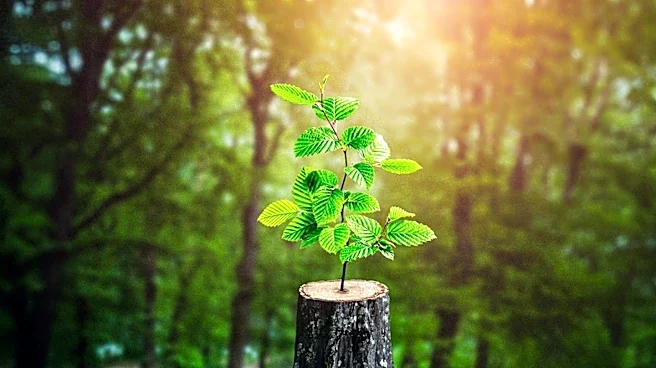
The unexpected survival and regeneration of butternut trees in Vermont carry significant ecological and conservation implications. The initial dire predictions highlighted the vulnerability of native species to introduced diseases, a common threat to biodiversity. The current findings suggest that some species may possess inherent resilience or adaptational capabilities that are not fully understood or easily predicted. This shift in understanding could influence future conservation strategies, potentially reducing the reliance on hybridization with non-native species and instead focusing on identifying and promoting naturally resistant native populations. For Vermont's ecosystem, the recovery of butternuts would mean the preservation of a native tree species that has historical ecological and cultural significance, having been a crucial food source for Indigenous peoples for millennia. The research also underscores the importance of long-term, on-the-ground observation in ecological studies, as initial models may not capture the full complexity of natural systems.
What's Next?
The immediate next steps involve continued and expanded monitoring of butternut tree populations across the northern Champlain Valley. Martin Kratt and Dale Bergdahl's team plans to track the health of hundreds of trees over multiple years to gather comprehensive data on their survival rates and overall well-being. This long-term study aims to identify specific factors contributing to the trees' resilience, which could include genetic resistance, environmental conditions, or interactions with other species. The findings from this research will be crucial for informing future conservation efforts and management strategies for butternut trees, not only in Vermont but potentially across their entire range. If the observed resilience is confirmed and understood, it could lead to revised conservation guidelines that prioritize the protection and propagation of naturally resistant native stock, potentially altering current approaches that consider hybridization as a primary solution.
Beyond the Headlines
This story delves into deeper implications regarding ecological forecasting and conservation paradigms. The initial prediction of near-total loss for butternut trees, followed by evidence of unexpected survival, highlights the inherent uncertainties in long-term ecological projections, especially when dealing with complex biological interactions and environmental factors. It suggests that nature's capacity for adaptation and resilience might often be underestimated. Furthermore, the debate around using hybridization with non-native species versus preserving pure native stock for disease resistance is a critical ethical and scientific consideration in conservation. The Vermont findings, indicating pure native butternut survival, could strengthen arguments for focusing on intrinsic resilience within native populations. This development also underscores the value of citizen science and local observations, as Kratt's initial findings were crucial in challenging established scientific consensus, demonstrating that valuable ecological insights can emerge from diverse sources beyond traditional academic research.