









What's Happening?
The U.S. government has refunded $81 billion in tariffs collected under President Trump's administration after the Supreme Court deemed them illegal. These tariffs, which were a significant part of Trump's economic strategy, aimed to boost domestic manufacturing
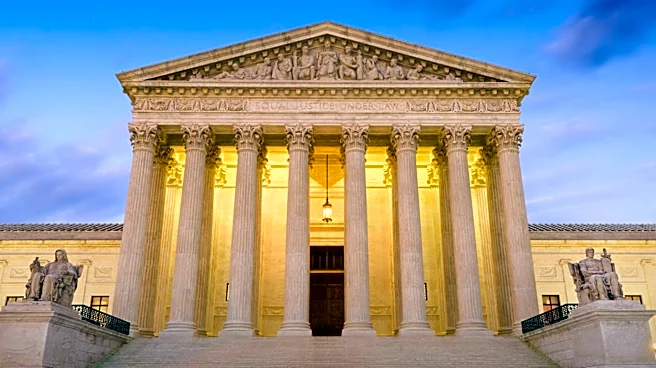
and reduce the federal deficit. However, the Supreme Court's decision in February forced the government to return the collected duties to affected companies. The refunds have significantly increased from $5 billion last year to $81 billion this fiscal year, which began in October 2025. The Treasury Department attributes this spike to the court's ruling, with most refunds processed in May and June. Despite the initial reduction in the federal deficit due to tariff income, the deficit has grown again, reaching $1.367 trillion in the first nine months of the fiscal year.
Why It's Important?
The Supreme Court's ruling and subsequent refunds highlight the challenges and complexities of implementing protectionist trade policies. The refunds have reversed some of the economic gains initially achieved through the tariffs, contributing to a growing federal deficit. This development underscores the delicate balance between protectionist measures and their economic repercussions. The decision also reflects the judiciary's role in checking executive actions, particularly those with significant economic implications. Companies that paid these tariffs are now receiving substantial refunds, which could impact their financial planning and operations. The ruling may also influence future trade policy decisions, as the administration considers new tariffs to address issues like forced labor and industrial overcapacity.
What's Next?
The current temporary 10% global tariff is set to expire on July 24, but the administration is preparing new duties targeting lax enforcement of anti-forced labor laws and excess industrial capacity. These new tariffs could affect major trading partners, including the UK, Japan, India, Taiwan, and China. The administration is also considering a 25% levy on Brazil and a 100% tariff on European countries imposing digital services taxes on U.S. tech companies. These potential measures indicate a continued focus on protectionist policies, despite the recent legal setback. The administration's approach may lead to further legal challenges and international trade tensions.