


What's Happening?
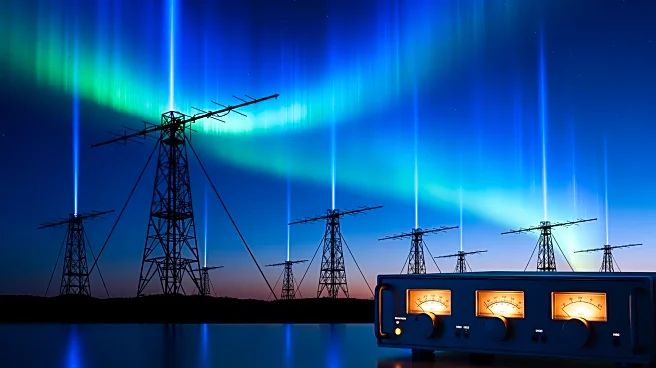
A strong geomagnetic storm on January 20, 2026, created rare conditions for long-distance VHF FM radio and TV signal reception, known as DXing, across North America. Enthusiasts reported receiving signals from as far as Colombia and Nicaragua, despite
typically unfavorable winter conditions for such propagation. The event was characterized by a class G4 Aurora, which can unpredictably affect broadcast bands. DXers like Jim Thomas and Bill Hepburn experienced unusual signal receptions, with Hepburn capturing TV signals from Venezuela and Colombia, and Thomas identifying Spanish audio from Colombia. The phenomenon is suspected to be F2-based propagation, a rare occurrence influenced by the solar cycle and geomagnetic activity.
Why It's Important?
This event highlights the complex and often unpredictable nature of radio signal propagation, particularly during geomagnetic storms. For the DXing community, such occurrences provide valuable opportunities to study and understand atmospheric and ionospheric conditions. The ability to receive signals over vast distances can have implications for communication technologies and strategies, especially in understanding how natural phenomena can impact signal transmission. This knowledge is crucial for improving the reliability and reach of broadcast services, particularly in remote or underserved areas.
Beyond the Headlines
The event underscores the importance of continued research into ionospheric conditions and their effects on communication systems. Understanding these phenomena can aid in developing more resilient communication networks that can withstand or adapt to natural disruptions. Additionally, the event serves as a reminder of the interconnectedness of global communication systems and the potential for natural events to influence technological infrastructure across borders.