
What's Happening?
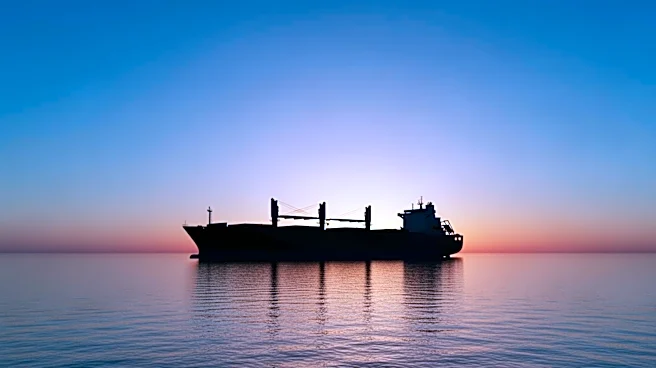
Maersk, a leading global shipping company, is maintaining a cautious approach to shipping in the Strait of Hormuz despite a two-week ceasefire between the U.S. and Iran. The conflict, which began with
U.S.-Israeli strikes on Iran, led to significant disruptions in the Gulf region's shipping activities. Maersk has suspended cargo bookings to many Gulf ports and imposed emergency fuel surcharges due to increased costs. The company is using alternative routes through ports in Saudi Arabia, Oman, and the UAE to continue operations. Maersk emphasizes that the ceasefire does not yet provide full maritime security, and decisions on transiting the Strait will depend on ongoing risk assessments.
Why It's Important?
The Strait of Hormuz is a critical chokepoint for global oil and shipping routes. Disruptions in this area can have significant impacts on global supply chains and fuel prices. Maersk's cautious stance reflects the broader uncertainty in the region, affecting shipping operations and economic stability. The situation underscores the importance of maritime security and the potential economic consequences of geopolitical tensions in the Middle East.
What's Next?
Maersk will continue to monitor the security situation closely and adjust its operations based on developments. The company will rely on guidance from authorities and partners to ensure safe transit through the Strait. The outcome of the ceasefire and any further diplomatic efforts will be crucial in determining the future stability of shipping routes in the region.