
What's Happening?
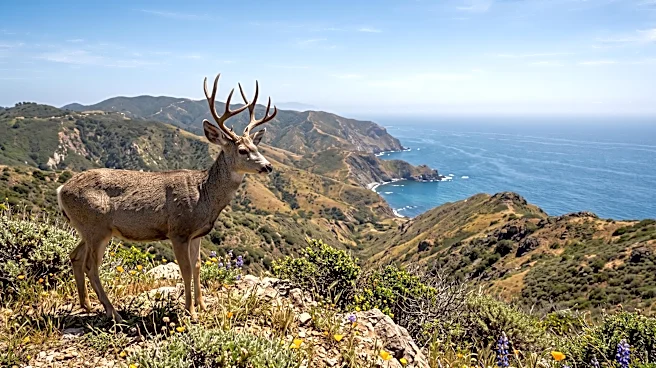
A Superior Court hearing on September 1 has tentatively granted the Catalina Island Conservancy the right to proceed with its plan to remove non-native mule deer from the island. Los Angeles County Superior Court Judge
Curtis A. Kin denied a request for a preliminary injunction, stating that no irreparable harm would occur as the process begins with a 'pre-removal assessment' and the 'actual eradication phase' is not immediate. The Conservancy announced that its 'limited deer removal assessment' work, scheduled throughout September and October, will commence, potentially affecting 200 to 400 deer. This action is part of the Conservancy’s 'Operation Protect Catalina Island' restoration plan, which aims to restore native flora and fauna and reduce wildfire threats by eliminating the entire mule deer population. Conservancy Interim President and CEO David Solomon stated that the organization is committed to protecting the island's ecosystem. However, opponents, including Fourth District Supervisor Janice Hahn, disagree with the eradication and have appealed to Governor Gavin Newsom to intervene, arguing that alternatives to total eradication should be considered.
Why It's Important?
This development is important for environmental conservation efforts in the U.S., particularly concerning the management of invasive species and their impact on native ecosystems. The Catalina Island Conservancy's plan highlights the complex challenges of ecological restoration, where the removal of non-native animals, even those perceived as part of the landscape, is deemed necessary for the survival of indigenous species and the prevention of environmental disasters like wildfires. The controversy surrounding the deer removal underscores the tension between conservation goals and public sentiment, as well as the ethical considerations of wildlife management. The involvement of local political figures like Supervisor Janice Hahn and the appeal to Governor Newsom elevate the issue to a broader policy debate, potentially influencing how similar ecological restoration projects are approached in other regions. The legal challenge also raises questions about the validity of environmental impact assessments and the delegation of authority within state agencies, setting a precedent for future environmental disputes.
What's Next?
The Catalina Island Conservancy will proceed with its 'limited deer removal assessment' throughout September and October. Opponents, led by Supervisor Janice Hahn, will continue to press Governor Gavin Newsom for intervention, arguing for alternatives to total eradication. An additional hearing is scheduled for October 1, where significant legal questions regarding the validity of exemptions to the California environmental impact report are expected to be addressed. Long Beach attorney Chuck Michel, representing Safari International and other wildlife groups, contends that the permit issued by the Department of Fish and Wildlife was flawed due to improper delegation of authority and failure to attach necessary documents for public notice. The outcome of this hearing could further impact the Conservancy's ability to proceed with the full eradication plan. Meanwhile, the Governor's Office has referred all requests for comment to the Department of Fish and Wildlife, which has declined further comment, suggesting a reluctance to intervene at this stage.
Beyond the Headlines
The debate over the Catalina Island deer removal extends beyond immediate environmental concerns, touching upon deeper philosophical and ethical questions about human intervention in natural ecosystems. The mule deer, though non-native, have been present on the island for nearly a century, leading to a perception among some that they are now part of the island's natural heritage. This conflict highlights the difficulty in defining 'native' versus 'invasive' species, especially when non-native populations have become established over long periods. The case also brings to light the role of scientific consensus versus public opinion in conservation policy. While the Conservancy emphasizes scientific review and ecological restoration, opponents highlight potential unintended consequences, such as increased wildfire risk due if the deer are removed. This situation could trigger broader discussions about the long-term ecological and social impacts of large-scale wildlife management interventions and the need for comprehensive, multi-faceted approaches that consider both scientific data and community values.