


What's Happening?
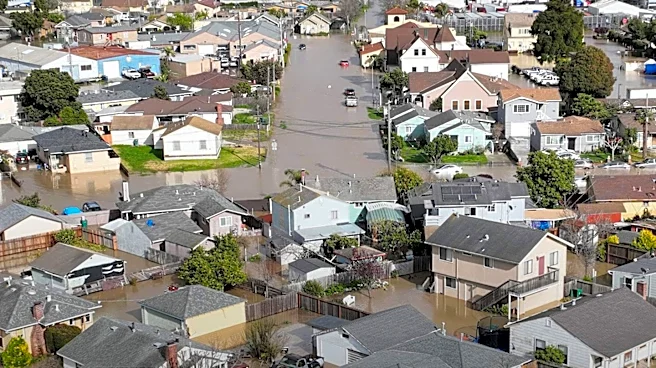
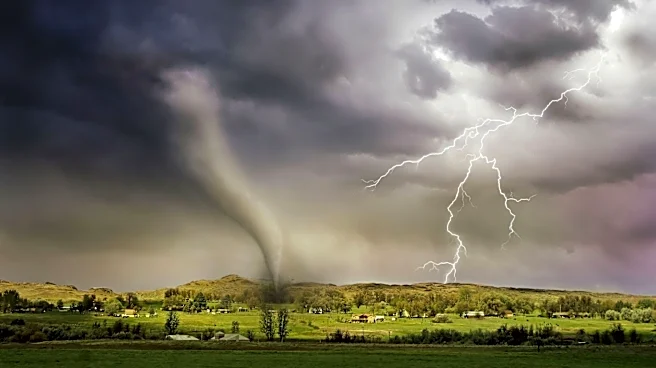
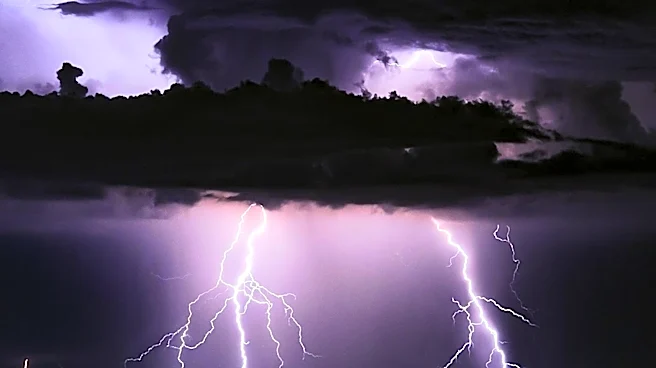
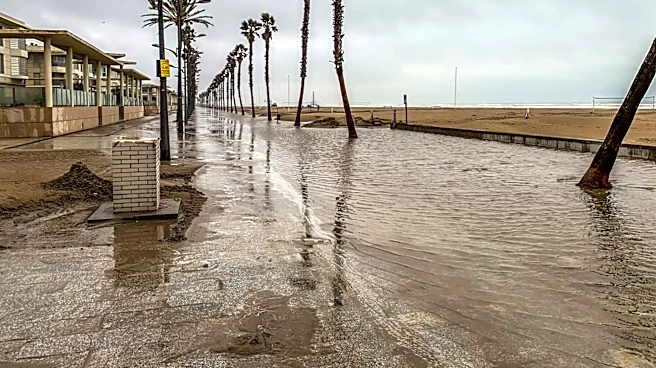
Las Vegas and North Las Vegas experienced monsoon storms early Wednesday afternoon, affecting areas such as Nellis Air Force Base and Centennial Hills. The National Weather Service issued a severe thunderstorm warning for these regions, which was in effect
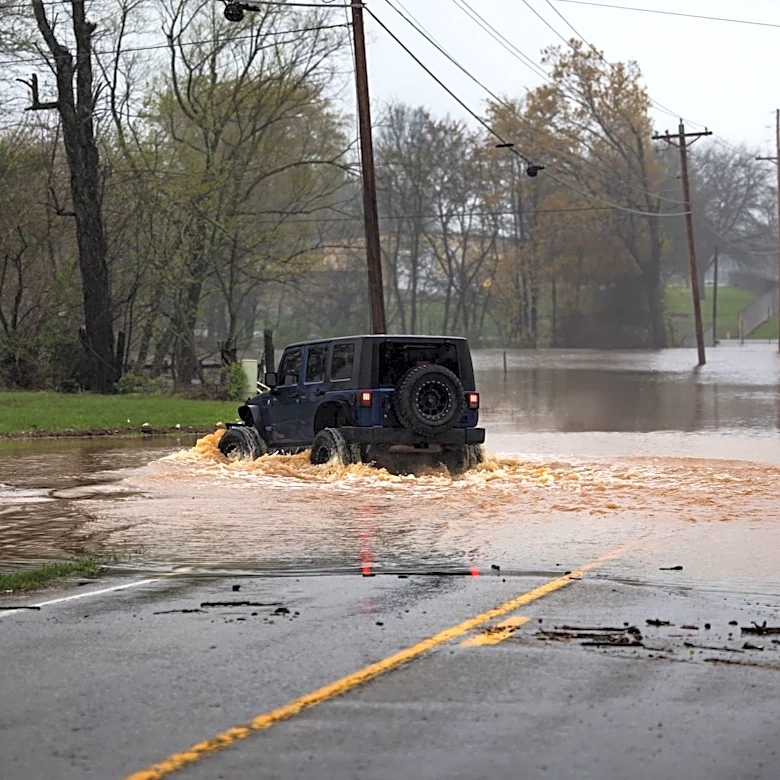
until 2:45 p.m., and a flood advisory for Henderson, North Las Vegas, and east Las Vegas until 4:30 p.m. This weather event marks a shift from the extreme heat that has characterized the region, with temperatures previously reaching up to 115 degrees on August 1. The last measurable precipitation at Harry Reid International Airport was recorded on June 23, breaking a 124-day dry spell. The forecast predicts a cooldown, with temperatures expected to remain below 100 degrees for several days due to a low-pressure system moving in from the California coast.
Why It's Important?
The arrival of monsoon storms and cooler temperatures is significant for Las Vegas, a city that has been under extreme heat warnings since late July. The shift in weather conditions provides relief from the intense heat, which can have severe implications for public health, energy consumption, and water resources. The rain also helps alleviate drought conditions, although the amount of precipitation is not expected to be substantial. For residents and businesses, the cooler weather may reduce the strain on air conditioning systems and lower energy costs. Additionally, the storms highlight the need for effective flood management systems in urban areas prone to sudden heavy rainfall.
What's Next?
As the monsoon season continues, residents and local authorities will need to remain vigilant for potential flash floods and other weather-related disruptions. The National Weather Service will likely continue to monitor and issue advisories as necessary. In the longer term, city planners and policymakers may need to consider infrastructure improvements to better handle such weather events, especially in light of climate change predictions that suggest more frequent and intense weather patterns.