



What's Happening?
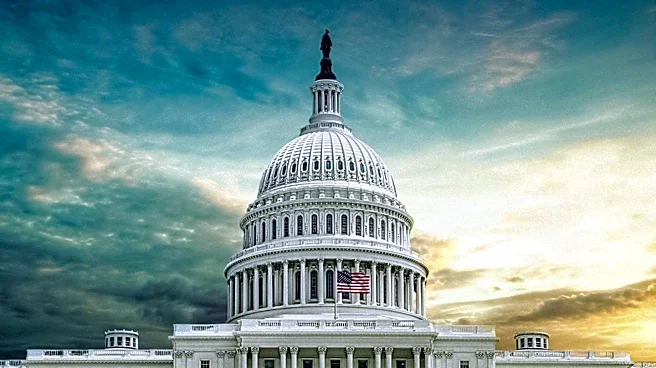
Representative George Whitesides (D-CA), alongside Representative Pat Harrigan (R-NC), has introduced the AI Cyber Defense Act. This bipartisan legislation has been referred to the House Committee on Science, Space and Technology. The primary goal of
this act is to enhance American cybersecurity defenses against sophisticated artificial intelligence (AI) attacks, specifically targeting AI distillation attacks. The bill mandates the National Institute of Standards and Technology (NIST) to collaborate with private-sector AI stakeholders. This collaboration aims to develop voluntary standards and best practices for the detection and prevention of these types of AI attacks. The initiative comes amid growing concerns regarding the potential misuse of AI technologies by various actors, including state-sponsored entities.
Why It's Important?
The introduction of the AI Cyber Defense Act is crucial for safeguarding U.S. national security and economic interests. AI distillation attacks, which involve extracting sensitive information or intellectual property from AI models, pose a significant threat to both government agencies and private corporations. By establishing voluntary standards and best practices, the act seeks to create a unified and robust defense mechanism across the AI ecosystem. This proactive approach can help prevent data breaches, protect proprietary algorithms, and maintain the integrity of critical AI-powered systems. The involvement of NIST, a leading authority in technology standards, ensures that the developed guidelines will be technically sound and widely applicable, fostering a more secure environment for AI development and deployment in the U.S.
What's Next?
The AI Cyber Defense Act will now undergo review by the House Committee on Science, Space and Technology. If it progresses through committee, it will then be subject to votes in the House and potentially the Senate. Should the bill become law, NIST will begin its work with private-sector AI stakeholders to formulate the voluntary standards and best practices. This process will likely involve extensive consultations with AI developers, cybersecurity experts, and industry leaders to ensure comprehensive and effective guidelines. The implementation of these standards could lead to increased investment in AI security measures across various sectors and potentially influence international norms for AI cybersecurity.
Beyond the Headlines
Beyond its immediate cybersecurity implications, the AI Cyber Defense Act highlights a broader recognition within U.S. policy-making of the dual-use nature of AI technology. While AI offers immense benefits, its potential for malicious use, particularly in cyber warfare and espionage, is a growing concern. This legislation underscores a shift towards preemptive regulatory and standardization efforts to manage emerging technological risks. It also reflects a bipartisan consensus on the need to protect critical infrastructure and intellectual property in the digital age. The act could set a precedent for future legislation addressing other complex AI-related challenges, such as ethical AI development and algorithmic bias, as the U.S. seeks to maintain its leadership in the global AI landscape.