






What's Happening?
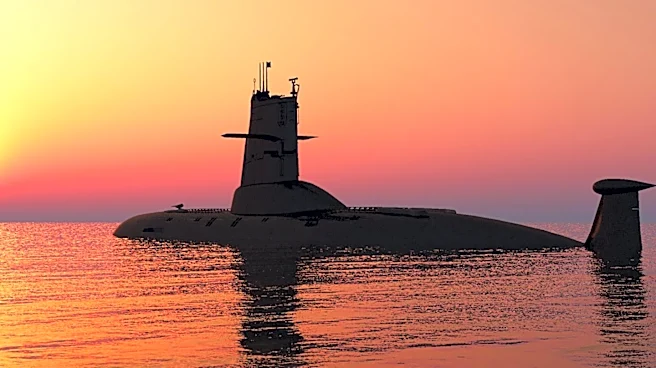
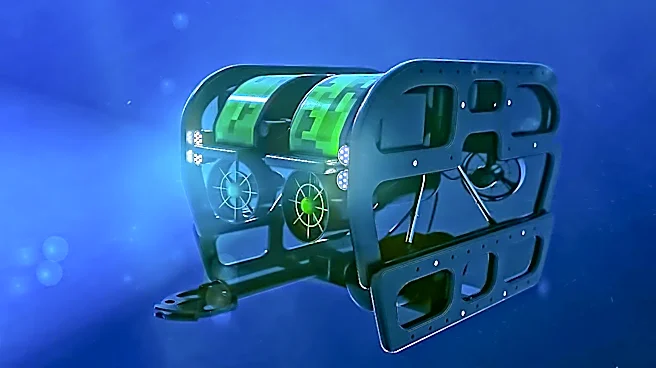
The U.S. Department of Energy (DOE) is supporting the development of seabed batteries designed to power drone submarines and seafloor sensors. This initiative is part of a Defense Department program called DEPTHS, which stands for Distributed Energy Provided
Throughout the Seas. The project is being led by Zeno Power, a startup based in Washington, D.C., and Seattle. The batteries utilize strontium-90, a radioactive isotope, to generate power without the need for cables or support ships. The DOE has partnered with Zeno Power to recycle a legacy radioisotope power system stored at Oak Ridge into fuel for these systems. The project aims to provide long-term power solutions for autonomous undersea vehicles, enhancing U.S. maritime capabilities.
Why It's Important?
This development is significant as it represents a strategic advancement in U.S. maritime technology, potentially enhancing the country's ability to monitor and secure its maritime borders. The use of seabed batteries could provide a sustainable and long-lasting power source for underwater drones, which are crucial for surveillance and data collection. This technology could reduce the need for frequent maintenance and support missions, thereby lowering operational costs and increasing the efficiency of maritime operations. Additionally, the project aligns with broader national security goals by ensuring the U.S. maintains technological superiority in underwater surveillance, especially in light of increasing global maritime activities.
What's Next?
The next steps involve the practical implementation of these seabed batteries. Zeno Power has already taken possession of a set of hot cells in California, which marks a transition from theoretical development to practical application. The company plans to demonstrate full-scale nuclear batteries by 2026, with the first deliveries expected in 2027. This timeline suggests that the U.S. could soon deploy these advanced power systems, potentially transforming its underwater operational capabilities. The success of this project could lead to further investments and developments in similar technologies, reinforcing the U.S.'s position in maritime technology.