






What's Happening?
U.S. inflation, as measured by the Consumer Price Index (CPI), accelerated to 3.7% in September on an annual basis, according to the Bureau of Labor Statistics (BLS). This marks an increase from the 3.4% recorded in August. Monthly CPI rose by 0.6%, exceeding
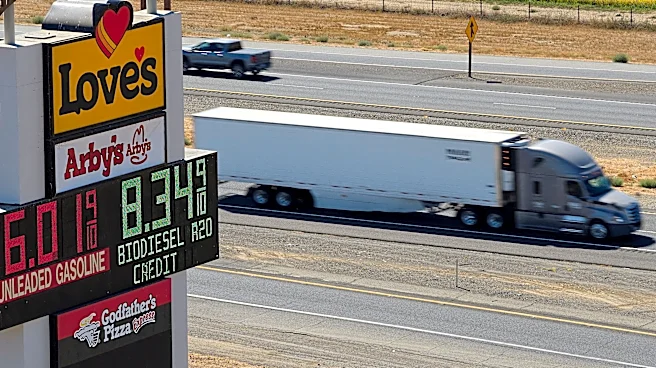
the 0.4% increase seen in August. The primary driver for this acceleration was elevated energy prices, with the gasoline index alone accounting for over half of the monthly rise in the headline CPI. Gasoline prices increased by 9.1% monthly and are up 34.2% annually. Core prices, which exclude volatile food and energy components, also rose more than expected, increasing by 0.3% monthly and 2.6% annually. Food prices remained unchanged for the month but are up 2.5% year-over-year, while housing costs increased by 0.4% monthly and 3.2% annually.
Why It's Important?
The acceleration of inflation in September has significant implications for U.S. households and the broader economy. Higher prices for essential goods like gasoline, groceries, and rent continue to exert financial pressure, particularly on lower-income Americans who allocate a larger portion of their income to these necessities. This persistent inflation complicates the Federal Reserve's efforts to manage economic stability. The hotter-than-expected CPI report has shifted market expectations regarding future interest rate decisions, with the probability of a rate hike at the upcoming Federal Open Market Committee meeting increasing. Businesses may face continued challenges with input costs, and consumers' purchasing power is eroded, potentially impacting retail sales and overall economic growth. The resilience of demand, despite rising prices, suggests that inflationary pressures may be more entrenched than previously anticipated.
What's Next?
The Federal Reserve is scheduled to hold its next monetary policy meeting on October 27-28. Following the September CPI report, the market's expectation for interest rates has shifted, with the probability of a 25 basis point rate hike increasing from 22.1% to 41.5%. This indicates that the Fed may consider further tightening monetary policy to combat persistent inflation. Economists like Vanguard senior economist Adam Schickling suggest that while stronger productivity and moderating wage growth could eventually help lower inflation, patience will be required. The ongoing trajectory of energy prices, particularly crude oil, will also be a critical factor influencing future inflation reports. Consumers should anticipate continued elevated costs for certain goods and services, and businesses may need to adjust pricing strategies in response to sustained inflationary pressures.
Beyond the Headlines
The sustained inflation, particularly in core prices, points to a deeper challenge beyond transient supply chain issues or immediate energy shocks. The resilience of consumer demand, as noted by experts, suggests that underlying economic strength or perhaps embedded inflationary expectations are contributing to price stickiness. This could lead to a prolonged period of higher interest rates, impacting borrowing costs for businesses and individuals, and potentially slowing investment and economic expansion. The disproportionate impact on lower-income households raises concerns about widening economic inequality and social stability. Furthermore, the Federal Reserve's credibility in achieving its 2% inflation target is under scrutiny, which could influence long-term market confidence and investment decisions. The interplay between fiscal policy, global commodity prices, and domestic demand will continue to shape the inflationary landscape.