

What's Happening?
China is launching a massive solar energy project known as the Great Solar Wall, which will stretch across one of the country's largest deserts. This initiative is part of China's strategy to reduce fossil fuel dependence and expand renewable energy capacity.
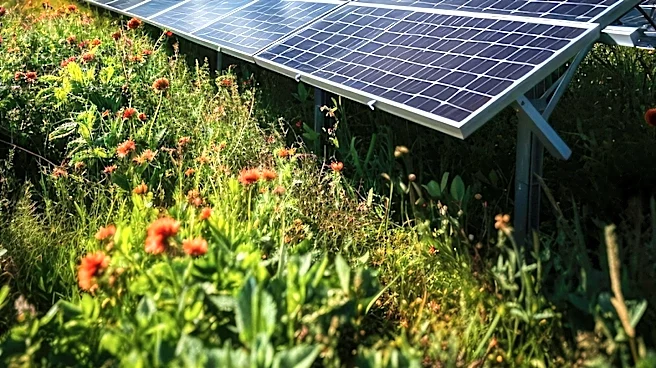
The project aims to harness the abundant sunlight in desert regions to generate electricity for millions of homes and industries. Additionally, the solar panels are expected to provide environmental benefits by reducing soil temperatures and moisture loss, potentially encouraging vegetation growth and stabilizing sand dunes.
Why It's Important?
The Great Solar Wall represents a significant step in China's efforts to diversify its energy sources and reduce greenhouse gas emissions. By utilizing desert areas for solar energy production, China can increase its renewable energy capacity while addressing environmental challenges such as desertification. The project also supports China's long-term climate commitments, including increasing the share of non-fossil fuels in its energy system. If successful, the initiative could serve as a model for similar projects in other arid regions worldwide, demonstrating how renewable energy infrastructure can contribute to ecosystem recovery.
Beyond the Headlines
The integration of renewable energy production with land restoration efforts is a unique aspect of the Great Solar Wall. By creating cooler microclimates and reducing wind speeds, the project may improve the survival of vegetation and strengthen natural barriers against erosion. This approach could help mitigate the environmental and economic challenges posed by desertification in northern China. The project's success could influence future renewable energy developments and land management strategies globally.