






What's Happening?
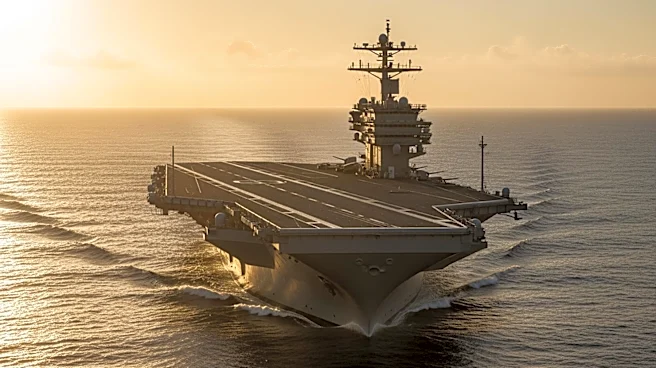
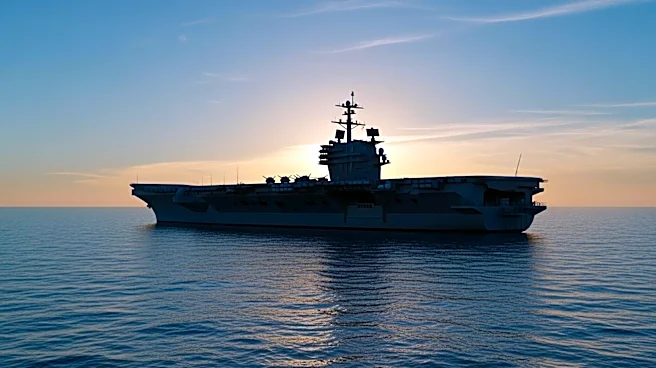
The U.S. Navy has decided to extend the service life of the USS Nimitz, a Nimitz-class aircraft carrier, through March 2027. This decision comes as the carrier scheduled to replace it, the USS John F. Kennedy, is not yet ready to enter the fleet. The Nimitz-class carriers,
first commissioned in 1975, were designed for a 50-year service life, with the USS Nimitz itself having surpassed this mark. The extension is necessary to maintain the legally required number of active aircraft carriers, as the Navy must have at least 11 operational carriers. The Nimitz-class carriers have been pivotal in U.S. military operations since the late Cold War, participating in conflicts such as the Gulf War, operations in Afghanistan and Iraq, and humanitarian missions.
Why It's Important?
The extension of the USS Nimitz's service highlights the challenges faced by the U.S. Navy in maintaining its fleet capabilities amid delays in the Ford-class carrier program. The Nimitz-class carriers have been a cornerstone of U.S. naval power, and their continued operation is crucial for maintaining global military presence and readiness. The delay in the USS John F. Kennedy's readiness underscores potential issues in the Ford-class program, which has faced cost overruns and technical challenges. This situation raises questions about the future of U.S. naval strategy and the ability to project power globally, impacting defense policy and military readiness.
What's Next?
The Navy will continue to operate the USS Nimitz while addressing the delays in the Ford-class program. A comprehensive review of the Ford-class carriers is underway to assess whether the cost and technological advancements justify the investment. The review's outcome could influence future naval procurement strategies and decisions regarding the construction of additional Ford-class carriers. The Navy must balance maintaining current capabilities with advancing new technologies to ensure long-term strategic advantages.