







What's Happening?
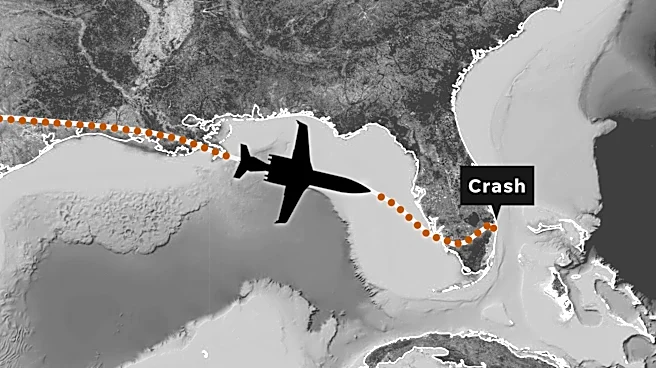
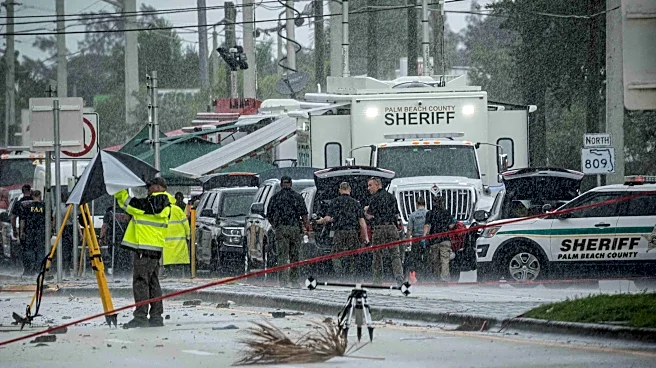
The National Transportation Safety Board (NTSB) is investigating a Learjet 60 crash that occurred near South Military Trail in Palm Beach County, Greenacres, killing all nine people aboard. The crew had reported encountering light clear ice and moderate
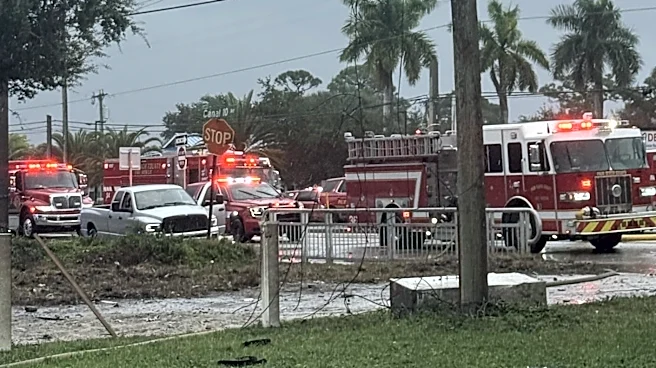
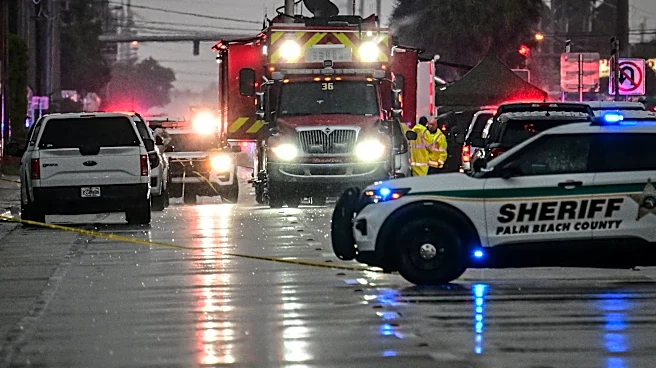
turbulence at 35,000 feet, with altitude deviations of approximately 700 feet, shortly before the plane entered an overspeed condition and began a rapid descent. The co-pilot was identified as 20-year-old Nathalia Filgueiras. The Learjet, operated by Aurora Aviation, doing business as Upper Jets, departed Austin-Bergstrom International Airport en route to North Eleuthera in the Bahamas. Less than 30 seconds after requesting to climb to 37,000 feet due to precipitation, the aircraft transmitted it was descending, followed by a mayday call and an unintelligible transmission about an overspeed condition. Investigators have found evidence of aircraft breakup before impact, with a debris field measuring about half a mile by four-tenths of a mile, affecting ball fields, businesses, and homes. The NTSB is also attempting to recover a cockpit voice recorder.
Why It's Important?
This incident highlights critical safety concerns within the aviation industry, particularly regarding adverse weather conditions and aircraft performance at high altitudes. The NTSB's investigation will be crucial in determining whether factors such as icing, turbulence, or mechanical failure contributed to the crash. The identification of a 20-year-old co-pilot also raises questions about pilot experience and training protocols for commercial flights, though the NTSB has not yet speculated on the co-pilot's role. The crash's impact on a populated area underscores the potential for ground casualties and property damage from aviation accidents. The findings from this investigation could lead to revised safety regulations, improved pilot training, or advancements in aircraft de-icing and weather detection systems, ultimately enhancing the safety of air travel for the public and flight crews.
What's Next?
The NTSB will continue its on-site investigation for several days, with a team of approximately 20 investigators specializing in aircraft systems, structures, flight recorders, weather, and air traffic control. Representatives from the Federal Aviation Administration and Learjet's manufacturer are also involved. Investigators will examine communications between the crew and air traffic control, as well as the actions taken by both. Efforts are underway to determine the exact weather conditions at the plane's altitude and to recover the cockpit voice recorder, which is crucial for understanding the final moments of the flight. The NTSB is soliciting information, photos, and videos from witnesses and advises anyone finding debris to leave it in place and contact authorities. The agency will not determine the probable cause at the scene, with the full investigation continuing after the on-site work is complete.
Beyond the Headlines
The tragic loss of life in this Learjet crash brings into focus the inherent risks of air travel, even with advanced technology and stringent safety measures. The incident could prompt a broader reevaluation of operational procedures for private and charter aviation, especially concerning flights in challenging weather. The NTSB's detailed analysis of the aircraft's breakup before impact may reveal structural vulnerabilities or design limitations that could have wider implications for the Learjet 60 model or similar aircraft. Furthermore, the investigation into the co-pilot's experience and the crew's decision-making process under duress could influence future training requirements and crew resource management protocols across the industry. The incident serves as a somber reminder of the continuous need for vigilance and improvement in aviation safety to prevent such catastrophic events.