




What's Happening?
Republican Senator Dave McCormick of Pennsylvania has asserted that the U.S. economy has improved during President Trump's second term, despite recent polling indicating widespread dissatisfaction with the economic status quo among the American public.
McCormick made these claims during appearances on Fox Business and CNBC, stating that families are 'much better off' now compared to the previous administration. This stance comes as President Trump's approval ratings are reportedly being affected by economic concerns. The senator's comments suggest a political strategy aimed at framing the current economic situation in a positive light, even if it means acknowledging that conditions may not be 'great' but are 'at least better.' This narrative is being pushed with the midterm elections less than ten weeks away, indicating an effort to influence public perception ahead of the polls.
Why It's Important?
This narrative is important because it highlights a significant divergence between political rhetoric and public perception regarding the U.S. economy. Senator McCormick's claims, while potentially serving a political strategy for the upcoming midterm elections, contradict recent data suggesting widespread public dissatisfaction with the economic status quo. Such discrepancies can influence voter behavior and the broader political landscape. If a significant portion of the electorate believes the economy is struggling, despite assurances from political figures, it could lead to shifts in voting patterns and impact the outcomes of key elections. Furthermore, the attempt to reframe economic conditions as 'better' rather than 'great' reflects a nuanced approach to managing public expectations and potentially mitigating negative sentiment towards the incumbent administration's economic policies. This political maneuvering underscores the critical role of economic perception in U.S. politics and its potential to shape electoral outcomes.
What's Next?
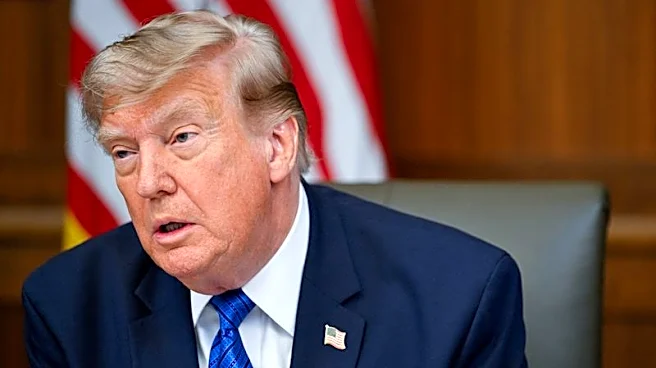
In the lead-up to the midterm elections, it is expected that Senator McCormick and other Republican figures will continue to emphasize perceived economic improvements under President Trump's second term. This strategy aims to counter negative public sentiment and bolster support for Republican candidates. The Democratic Party and its allies are likely to challenge these claims, presenting data and arguments that highlight economic challenges and public dissatisfaction. This will likely lead to intensified political debates and media scrutiny over economic indicators and their interpretation. The outcome of these debates could significantly influence voter confidence and turnout in the midterms. Additionally, President Trump is anticipated to continue his efforts to portray the economy in a positive light, potentially through public statements and rallies, as he has previously described the current economic period as a 'golden age.'
Beyond the Headlines
The ongoing debate over the state of the U.S. economy and its portrayal by political figures like Senator McCormick reveals deeper implications concerning the role of economic narratives in shaping public opinion and political discourse. In an era where information can be selectively presented, the ability of political leaders to influence how the public perceives economic realities becomes a powerful tool. This situation raises questions about media literacy and the public's capacity to critically evaluate economic claims against empirical data. The emphasis on 'feeling' better off, rather than relying solely on objective economic indicators, can create a disconnect between lived experiences and official pronouncements. This dynamic can further polarize political discussions and erode trust in institutions, as different factions present conflicting versions of economic truth. Ultimately, the long-term impact could be a more fragmented public understanding of economic policy and its effects.